
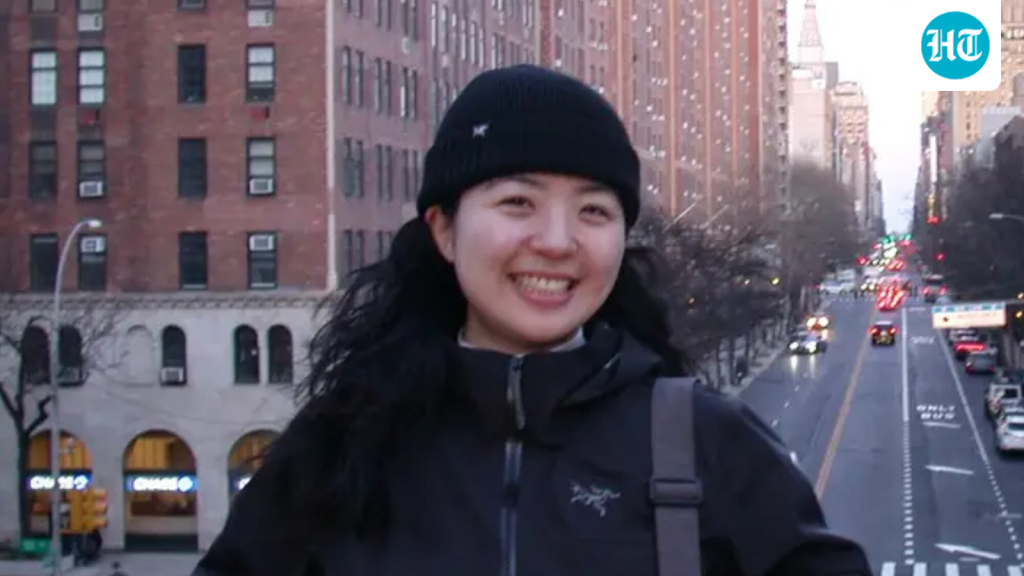
Designer Trades a High-Paying Tech Role for Writing and Content Creation
Bharatmorning.com – Heigi Jeong left a well-paid product design position in June 2026 to test whether a self-directed career in writing and online content can offer a more fulfilling future. The decision meant stepping away from an annual salary of about $173,000, roughly ₹1.5 crore, and accepting the uncertainty of irregular income.
Jeong has set herself a clear limit for the experiment: one year. During that time, she plans to focus on her book, develop her content work and determine whether independent work is sustainable. At the end of that period, she can choose whether to continue on her new path or return to a corporate role.
A Comfortable Career, but Too Many Commitments
Originally from Korea, Jeong moved to Toronto in 2020 for an in-house product designer role at a technology company. Her responsibilities included designing mobile applications and websites. The position offered the kind of routine many professionals seek: a typical 9 am-to-5 pm schedule, approximately 40 working hours each week and enough financial stability to travel during time off.
She did not leave because she disliked the work. By her own account, the role was comfortable and came with a healthy separation between office hours and personal life. However, she had also begun building another professional identity outside her day job.
Alongside product design, Jeong was creating content and had secured a book deal. Balancing a full-time technology role, writing commitments and content production increasingly became difficult. Rather than continue dividing her attention between three major responsibilities, she chose to concentrate on the two creative pursuits she wanted to explore further.
The move reflects a challenge familiar to many people pursuing side projects. A stable salary can provide security, but creative work often demands sustained time, focus and flexibility that may be hard to find after a full workday. Jeong decided that trying the uncertain route was preferable to wondering what might have happened if she had never attempted it.
Anxiety Before the Leap
Giving notice was not simple. In the weeks before she resigned, Jeong experienced anxiety and repeatedly questioned whether leaving a dependable income would become a decision she regretted. Financial predictability had been one of the strongest advantages of her former role, and walking away from it required a major personal calculation.
She made the change feel more manageable by treating it as a defined trial rather than an irreversible break from corporate work. The one-year time frame gives her a chance to assess the reality of self-employment while retaining the option of returning to a more conventional career later.
“No regrets.”
That outlook does not mean the financial transition has been effortless. Her income from content creation has been uneven. In July, she earned only $6 from that work because a payment was delayed. Her book advance has supplied some income, but earnings can fluctuate sharply from one month to another.
Some months may produce no income at all, while stronger periods can generate more than she earned in her previous office job. That unpredictability is one of the central realities of creator-led work: revenue can depend on timing, payment schedules, projects and audience-related opportunities rather than a fixed monthly payroll.
A Different Daily Rhythm
Jeong’s days now look very different from her former office routine. She cycles to the gym in the morning, spends hours writing from an office and fits content creation into the rest of her schedule. The change has given her more control over how she spends her time, but it has also removed the clear stopping point that came with a traditional workday.
In a corporate role, work can often be left behind at the end of scheduled hours. Independent workers may find that another idea, edit, message or task is always waiting. For Jeong, self-employment has made it harder to fully switch off, even as it has created more room for writing and creative projects.
Three months into her one-year plan, she remains confident in the choice. Even if she decides to re-enter corporate life later, she does not view the experiment as wasted time. The experience itself offers an answer that her previous routine could not provide: whether pursuing her own work can become a lasting career.
What Her Decision Illustrates
Jeong’s experience is not a promise that leaving a secure job will lead to immediate financial success. Her first months underline the opposite: independent income can be volatile, and even established projects may face delayed payments. Yet her approach also shows the value of setting boundaries around a major career gamble.
By defining a one-year period, she has created a practical way to test a new professional direction without framing it as a permanent rejection of everything that came before. Her product design experience, established work history and corporate skills remain part of her career, whether she continues independently or eventually returns to a technology company.
For Jeong, the larger risk was not the possibility of going back to an office job. It was never discovering what her writing and content career might become if she gave it her full attention.
Related Reading
Frequently Asked Questions
What is Woman quits 1 5 crore job?
Woman quits 1 5 crore job is the main topic of this guide. The article explains the context, practical details, and next steps readers should understand.
Why does Woman quits 1 5 crore job matter?
Woman quits 1 5 crore job matters because readers are looking for a useful answer, not just a short summary. Good content should match search intent and help them decide what to do next.