
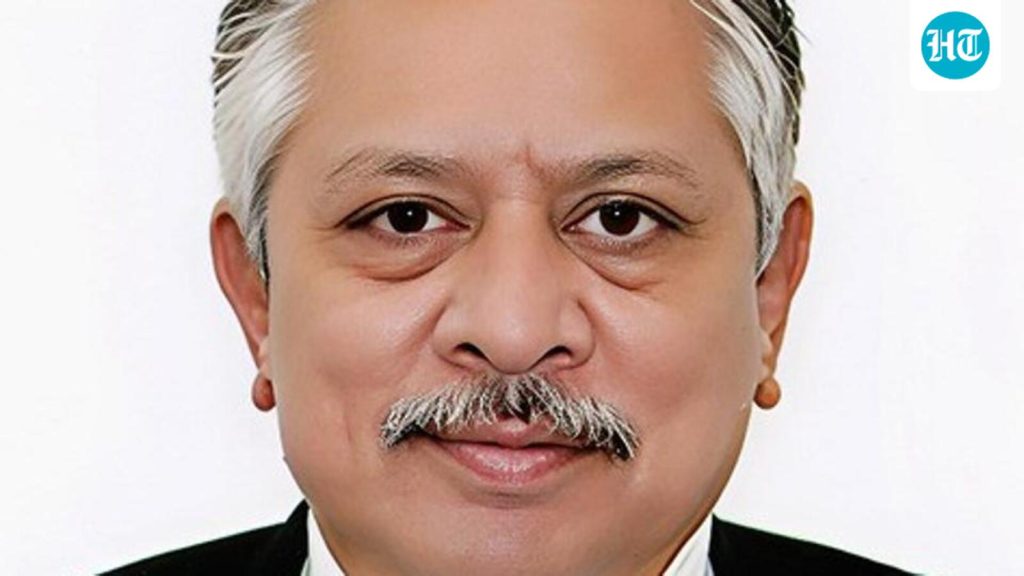
SC Collegium Picks Junior Judge Over Acting CJ
Bharatmorning.com – The SC collegium passes over Justice Sanjeev Prakash Sharma, the acting chief justice of the Rajasthan High Court, in favour of a junior colleague for the chief-justice chair of the Jammu & Kashmir and Ladakh High Court. Justice Pushpendra Singh Bhati, who entered the Rajasthan bench on the same day as Sharma in 2016 but ranks below him in seniority, was named at the panel’s August 31 sitting. The recommendation lands with Justice Sharma just 23 days from his mandatory retirement on September 26, effectively sidelining a sitting acting chief justice in the final stretch of his tenure.
In that same session, the body also put forward Chhattisgarh High Court judge Justice Sanjay Kumar Agrawal to succeed as chief justice of the Rajasthan High Court. The twin recommendations reshape the leadership trajectory of two courts while a formal institutional inquiry into allegations against Sharma remains unresolved.
How Seniority Was Set Aside
Both judges received their additional-judge appointments under a single presidential notification dated November 16, 2016, which also named Dinesh Mehta and Vinit Kumar Mathur. That notification fixed the order of seniority, placing Sharma ahead of Bhati. Their conversion to permanent judges on March 16, 2018 preserved the original ranking.
Sharma, born in September 1964, retires on September 26, leaving roughly three weeks of bench service. Bhati, born in September 1970, retains more than six years of service ahead of him, with retirement due in September 2032. Recommending Bhati for a chief-justice elevation while Sharma still occupies the acting chief-justice chair in the very same court marks a clear departure from the strict seniority sequence that ordinarily governs such appointments.
Allegations That Preceded the Decision
Days before the August 31 sitting, Supreme Court judge Justice Sandeep Mehta sent three letters to Chief Justice of India Surya Kant — dated August 2, 10, and 17 — urging two specific actions: appointing a regular chief justice from another high court to Rajasthan and transferring Sharma out of the state. In those letters, Mehta levelled charges of “corruption,” “nepotism,” and “favouritism” against the acting chief justice, alleging that Sharma had abused his roster authority by selectively routing cases to his own bench and showing preferential treatment to “rich and influential” litigants. Additional grievances concerned administrative decisions tied to the Jodhpur principal seat, the designation of senior advocates, and a three-day conference held in Jaipur.
For the first time since the controversy entered public view, Sharma issued a written statement rejecting the allegations as “unfounded, false and factless.” He confirmed that his written response, accompanied by supporting evidence, had been submitted directly to the Chief Justice of India. Sharma attributed the need to speak publicly to “recent developments in the media and social media,” characterising the allegations as products of “animosity,” and urged journalists, advocates, and the wider public to await the CJI’s determination.
Chief Justice Kant has framed the matter explicitly: the allegations are being examined through the appropriate institutional mechanism, and Sharma must be afforded a fair opportunity to respond. He made clear that the allegations, standing alone, cannot be treated as findings against the acting chief justice. That posture gives the August 31 recommendations a distinct character — they do not adjudicate the truth or falsity of Mehta’s accusations but constitute an independent determination about the future leadership of two high courts, made while the formal process continues.
Frequently Asked Questions
Why was a junior judge recommended over a senior acting chief justice?
The recommendation reflects the collegium’s independent assessment of suitability for the Jammu & Kashmir and Ladakh High Court chair. Because Sharma is days from retirement and faces an ongoing institutional inquiry, the panel opted for a judge with more than six years of remaining bench service.
Does this recommendation mean Justice Sharma has been found guilty of any allegation?
No. Chief Justice Kant has stated that the allegations are under examination through the proper institutional mechanism and that Sharma has been given a fair opportunity to respond. The recommendation is an independent leadership decision, not a finding on the merits of any charge.
What happens next for Justice Sharma?
Sharma will serve out his remaining days until his mandatory retirement on September 26. His written response and supporting evidence are with the Chief Justice of India, and he has indicated he will present his case publicly at a suitable juncture, subject to the CJI’s approval.