
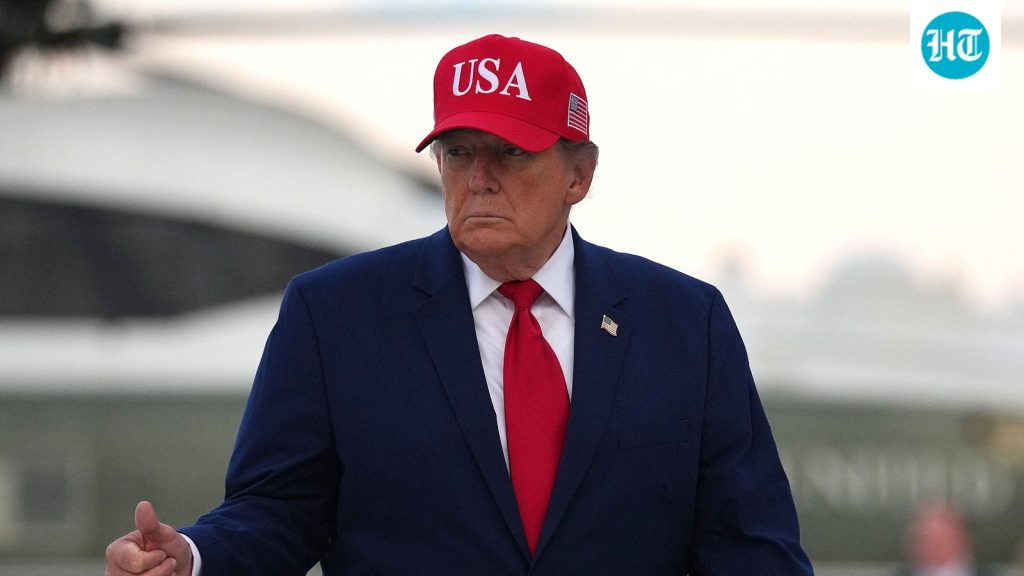
Trump suspends selected Russia-linked penalties in move affecting India tariff threat
Bharatmorning.com – US President Donald Trump has used an executive waiver to suspend the application of certain sanctions, restrictions and duties connected to Russian energy exports, citing the national interests of the United States. The decision concerns provisions in legislation signed by Trump last month that had raised the prospect of severe trade penalties, including tariffs of up to 100%, for countries continuing to engage with Russian energy.
The waiver uses a clause in the legislation that permits the president to delay or set aside its punitive measures under specific circumstances. Its immediate effect is to remove the application of the relevant measures while the waiver remains in force, easing a potential source of pressure on countries such as India that have faced scrutiny over energy ties involving Russia.
Executive waiver invokes national-interest provision
Trump stated that he was exercising the authority provided in the law and had formally notified Congress of the decision. The executive action frames the move as one taken to protect US interests at the present time.
I am hereby waiving the application of such sanctions, restrictions, and duties provided for in the Graham Act. I have submitted to the Congress a certification that the issuance of such a waiver at this time is in the national interests of the United States.
The legislation had been associated with the late Senator Lindsey O. Graham and was intended to create a tougher mechanism for responding to Russia’s invasion of Ukraine. Its central purpose was to provide for punitive measures tied to Russian energy exports, increasing the potential economic consequences for activity connected with those exports.
By invoking the waiver, Trump has not erased the law or its underlying powers. Instead, the action pauses the use of the specified sanctions, restrictions and duties. That distinction matters: the authority remains available, while the administration has chosen not to apply it in the circumstances described by the executive order.
Why the decision matters for India
India had faced the possibility of being caught in the wider trade implications of the legislation because of concerns that its links to Russian energy could trigger punitive tariff action. A threatened tariff of 100% would have represented an exceptionally serious trade risk, potentially affecting commercial planning and adding uncertainty for businesses dependent on trade between the two countries.
The waiver reduces that immediate danger. It does not, however, settle every question surrounding Russia-related economic policy, energy purchases or future trade measures. The broader political and diplomatic debate over Russia’s war in Ukraine continues, and the legislation itself remains part of the US policy framework.
For Indian policymakers and businesses, the development is significant because tariff threats can influence decisions well before they are imposed. Importers, exporters, manufacturers and investors may all need to assess how potential changes in duties could affect costs, supply chains and market access. Suspending the relevant measures removes one immediate layer of uncertainty, though it does not guarantee that policy will remain unchanged.
A law designed to increase pressure on Russia
The measure signed last month was built around the idea that economic pressure could be used to respond to Russia’s invasion of Ukraine. Sanctions and trade restrictions are commonly designed to limit financial benefits, commercial access or strategic leverage connected to targeted activity. In this case, the legislation also created concern for countries whose energy relationships could place them within the reach of US penalties.
Energy trade is especially sensitive because oil and other energy supplies affect inflation, transport, industrial activity and household costs. Governments therefore often weigh foreign-policy objectives alongside domestic economic considerations when deciding how to structure sanctions, duties and exemptions.
The national-interest waiver acknowledges that such decisions may require flexibility. Rather than requiring automatic application in every situation, the law permits the president to determine that a temporary suspension better serves US interests. Trump’s certification to Congress establishes the formal basis for that judgment under the legislation.
What remains unchanged
Russia’s invasion of Ukraine remains the central issue behind the legislation. The waiver does not alter the law’s stated objective of creating punitive options related to Russian energy exports, nor does it change the broader international focus on the conflict and its economic consequences.
It also does not amount to a blanket declaration that all Russia-related sanctions have been removed. The executive action refers specifically to the sanctions, restrictions and duties provided for under the Graham Act. Readers should distinguish between that targeted waiver and the wider set of policies, regulations and economic measures that may exist separately.
The decision leaves open the possibility that the administration could revisit the issue as conditions change. Because the waiver was justified as being in the national interests of the United States “at this time,” its wording signals that the assessment is tied to current circumstances rather than a permanent abandonment of the law’s enforcement tools.
Outlook
The immediate result is a reprieve from the Russia-related duties and restrictions covered by the waiver, including the tariff threat that had caused concern for India. The longer-term picture will depend on future US policy decisions, developments in the Ukraine conflict and the administration’s assessment of national interests.
For now, the executive order provides breathing room in a highly sensitive area where trade, energy security and geopolitics intersect. It demonstrates how waiver powers can shape the practical effect of legislation, even when the law itself remains in place and its broader objectives continue to guide policy.
Related Reading
Frequently Asked Questions
What is Trump waives some Russia related sanctions?
Trump waives some Russia related sanctions is the main topic of this guide. The article explains the context, practical details, and next steps readers should understand.
Why does Trump waives some Russia related sanctions matter?
Trump waives some Russia related sanctions matters because readers are looking for a useful answer, not just a short summary. Good content should match search intent and help them decide what to do next.