
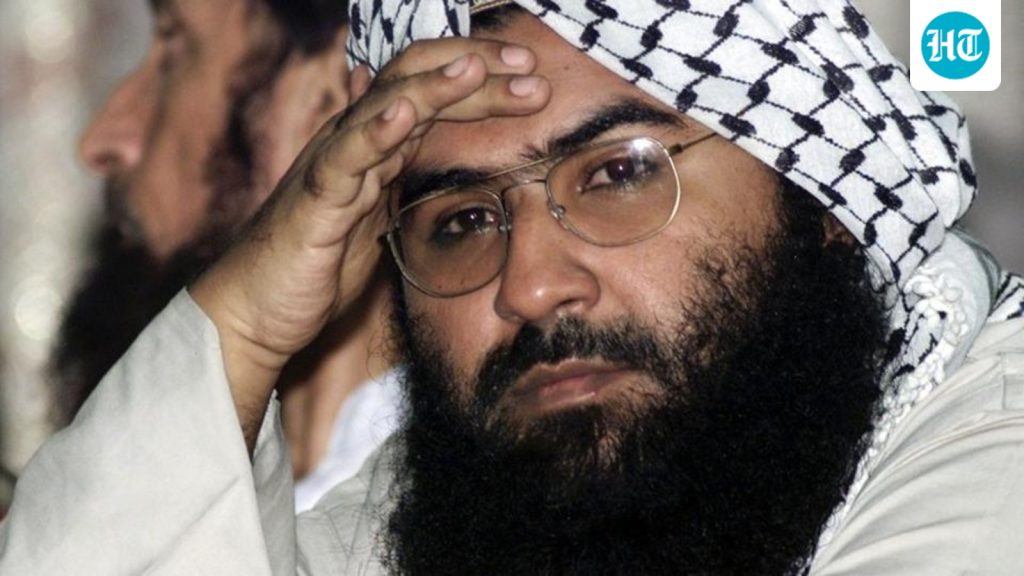
Pakistan Raises Reward for Masood Azhar in Updated Most-Wanted List
Bharatmorning.com – Pakistan’s Federal Investigation Agency has placed Jaish-e-Mohammed chief Masood Azhar on its 2026 list of most-wanted terrorists and increased the reward for information that results in his capture to PKR 70 lakh. The figure marks a substantial rise from the PKR 20 lakh reward previously associated with Azhar.
The updated list arrives before the Financial Action Task Force plenary expected in October, a significant moment for Pakistan as it seeks to avoid renewed placement on the body’s grey list. FATF develops international standards intended to curb money laundering and the financing of terrorism, and its assessments carry consequences for a country’s financial credibility and international dealings.
Azhar’s inclusion gives fresh prominence to a longstanding question over his whereabouts. Pakistan has maintained since 2021 that he was no longer within the country and had gone to Afghanistan. In that year, the FIA announced a PKR 50 lakh reward for information leading to his arrest. The latest Red Book raises that amount again, to PKR 70 lakh.
Renewed Attention Before FATF Review
Being named in a national most-wanted register signals that authorities are formally seeking information that could help locate and arrest an individual. The higher reward may also be seen in the context of Pakistan’s efforts to demonstrate action against individuals and networks accused of terrorist activity and financing.
For FATF purposes, enforcement measures, investigations and the ability to pursue designated individuals are closely watched. The October plenary will therefore provide an important international setting for Pakistan’s updated list and the steps it takes to implement it.
Azhar is regarded by India as one of its most-wanted terrorist figures. He has been linked to the 2001 attack on the Indian Parliament, the 2008 Mumbai attacks, the 2016 Pathankot attack and the 2019 Pulwama attack. He has also been designated a global terrorist by the United Nations.
His history has remained a central point of tension between India and Pakistan for decades. India released Azhar in 1999 as part of an exchange involving passengers held during the hijacking of Indian Airlines flight IC-814. His subsequent role as head of Jaish-e-Mohammed has kept him at the centre of regional security concerns.
Twenty-Six Eleven Attack Cases Featured in Red Book
The FIA’s revised Red Book also identifies 19 people connected to the November 2008 Mumbai attacks. The individuals are accused of roles involving financing, logistical support or the arrangement of boats used by the attackers.
Eleven people linked to Lashkar-e-Taiba are named in connection with preparations for the attackers’ sea passage aboard the Al-Hussaini and Al-Fauz. They are Muhammad Amjad Khan of Multan, Shahid Gafoor of Bahawalpur, Mohammad Usman of Sahiwal, Ateeq-ur-Rehman of Lahore, Riaz Ahmad of Hafizabad, Muhammad Mushtaq of Gujranwala, Muhammad Naeem of Dera Ghazi Khan, Abdul Shakoor of Karachi, Muhammad Sabir Salfi of Multan, Muhammad Usman of Lodhran and Shakeel Ahmed of Rahim Yar Khan.
The list separately identifies six people accused of supplying money for the Mumbai operation. Muhammad Iftikhar Ali of Faisalabad, described as an LeT operative, is accused of spending PKR 70,000 to establish Voice over Internet Protocol connections used by the attackers to communicate with handlers. Mohammad Zia of Rawalpindi is accused of providing PKR 80,000 to LeT for the attack.
Also named are Mohammad Abbas Nasir of Khanewal, accused of contributing PKR 2,53,000; Javed Iqbal of Kasur, accused of providing PKR 1,86,430; Mukhtar Ahmad of Mandi Bahauddin, accused of donating PKR 2,98,047; and Ahmed Saeed of Battagram, accused of supplying PKR 21 lakh for the operation.
Continuing Dispute Over Militant Leaders
The naming of Azhar and the alleged Mumbai attack facilitators highlights the continuing importance of counterterrorism cooperation and financial enforcement in South Asia. The Mumbai attacks, which took place in 2008, remain one of the most consequential terrorist incidents in India’s recent history and continue to shape regional diplomatic and security debates.
India has repeatedly challenged Pakistan’s position on the location of Azhar and Lashkar-e-Taiba chief Hafiz Saeed, accusing Islamabad of failing to acknowledge their presence in the country.
India has accused Pakistan of “feigning ignorance” about the presence of Azhar and Hafiz Saeed.
The FIA’s revised register does not resolve the competing claims over Azhar’s location. It does, however, place his name prominently within Pakistan’s official wanted-terrorist framework and attaches a higher financial incentive for information that could lead to his apprehension.
As the FATF meeting approaches, the effectiveness of such measures will depend on enforcement, credible investigations and sustained action against the financial and logistical structures alleged to support militant activity. The updated Red Book places those issues back in focus while underscoring the enduring regional significance of cases tied to Azhar, Jaish-e-Mohammed, Lashkar-e-Taiba and the Mumbai attacks.
Related Reading
Frequently Asked Questions
What is Pakistan names Jaish chief Masood Azhar?
Pakistan names Jaish chief Masood Azhar is the main topic of this guide. The article explains the context, practical details, and next steps readers should understand.
Why does Pakistan names Jaish chief Masood Azhar matter?
Pakistan names Jaish chief Masood Azhar matters because readers are looking for a useful answer, not just a short summary. Good content should match search intent and help them decide what to do next.