
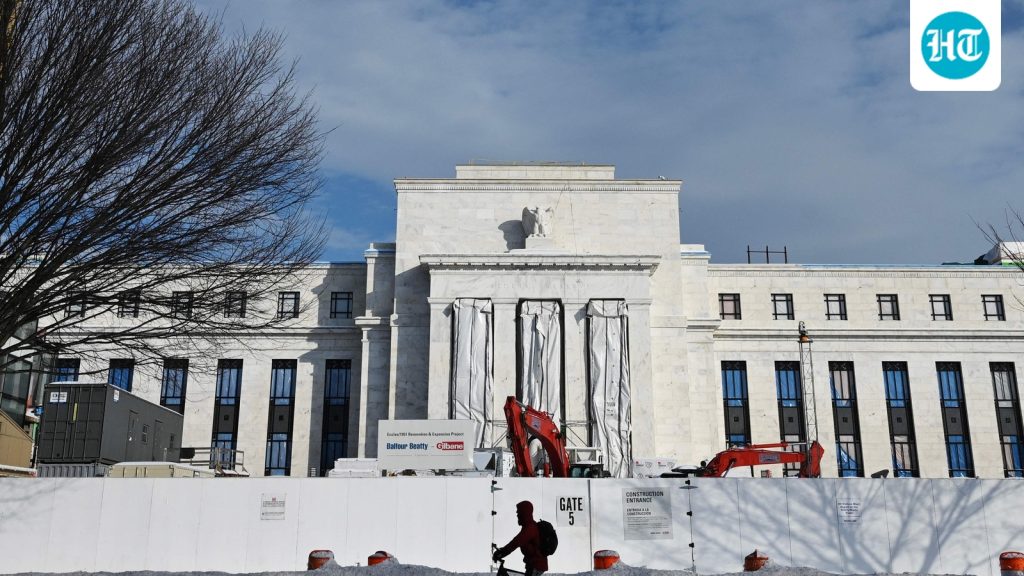
Fed Rate Increase Could Lift Savings Yields but Add to Borrowing Costs
Bharatmorning.com – The Federal Reserve is expected to raise interest rates on Wednesday for the first time in more than three years, a move that could gradually improve returns for some savers while making certain forms of borrowing more expensive.
Financial markets are heavily positioned for a 0.25 percentage-point increase in the federal funds rate. Federal funds futures indicate roughly a 90% probability of a quarter-point move. Although the Fed’s decision is closely watched by investors, its effects can also reach household budgets through bank deposits, credit cards, personal loans and mortgage markets.
The federal funds rate is the benchmark banks use when lending reserves to one another overnight. It does not directly set the interest rate on every consumer product, but it strongly influences the broader cost of money. The timing and size of the impact can vary widely depending on the type of account or loan.
Savers May Need to Compare Rates
A higher Fed rate can create better opportunities for people holding cash, but consumers may not see meaningful changes at every bank. Deposit rates often adjust slowly, especially at large institutions offering standard checking and savings products.
Checking accounts have seen little movement in 2026. The national average rate is about 0.07%, reflecting the fact that checking accounts are intended primarily for paying bills, receiving deposits and accessing money daily. Even if rates move higher after the Fed’s decision, the additional return on a typical checking balance is likely to be modest.
Traditional savings accounts are paying an average of around 0.38%. These accounts can be useful for money needed in the near future, including emergency savings or funds set aside for planned expenses. However, leaving a large cash balance in an account with a low annual percentage yield may produce only limited interest income.
High-yield savings accounts present a different picture. Many currently offer returns in the 3% range, and some are approaching 4%. A rising-rate environment may make these products more attractive for households that want their cash available without tying it up for a long period.
For savers, the central consideration is not simply whether the Fed raises rates, but whether their own bank passes along better yields. Comparing annual percentage yields, account requirements and withdrawal rules can matter more than waiting for a standard account rate to rise.
Money Market Accounts and CDs Could Become More Attractive
Money market accounts can offer another home for accessible cash. They generally combine interest earnings with relatively easy access to funds, though individual account rules can differ. This may be particularly relevant for people with $10,000 or more sitting in cash while they decide how to use it.
The national average money market rate is about 0.63%, which remains low at many conventional banks. Higher-yield money market accounts, however, are largely paying rates in the mid-3% range, with some yields just under 4%.
Certificates of deposit may also benefit from a higher-rate setting. CDs typically pay a fixed rate for an agreed term, so they can appeal to savers who do not need immediate access to all of their money. Banks have already begun lifting some CD rates. The trade-off is that withdrawing funds before the term ends can result in a penalty.
Choosing among a high-yield savings account, money market account and CD depends on when the money may be needed. Cash reserved for emergencies generally needs to remain readily available, while funds with a known future use date may be better suited to a product with a fixed term.
Credit Card Borrowers Could Feel Changes Quickly
Credit card rates are among the consumer rates most closely tied to Fed policy because many cards carry variable annual percentage rates. Credit-card interest has risen from roughly 16% in 2021 to more than 22% today.
People who pay their statement balance in full each month usually do not pay interest on purchases, meaning a rate increase should have little immediate effect on them. The situation is different for cardholders who carry balances from one billing cycle to the next.
Michele Raneri, vice president and head of U.S. research at TransUnion, expects the change in borrowing costs to be limited as variable-rate products incorporate the Fed’s move.
“Minimally higher” borrowing cost for consumers.
Raneri said a borrower with the average second-quarter 2026 card balance of $6,610 and a 22% APR could see the minimum monthly payment increase by about $1.38 if the higher rate is fully passed through.
That amount may look minor in a single month, but the expense can accumulate for consumers with high balances or those paying only the minimum due. Interest charges are especially persistent when repayment is slow because a larger share of each payment can go toward interest rather than principal.
Reducing revolving card debt can lessen exposure to future rate increases. Consumers facing high card rates may also want to review their repayment plans, prioritize expensive balances and avoid adding new debt where possible.
Personal Loans May Also Cost More
Personal-loan borrowing has already become more expensive. The average rate is currently about 11.86%, while advertised rates generally fall in the 7% to 8% range. The actual offer a borrower receives can differ substantially based on creditworthiness, lender policies, loan length and other underwriting factors.
A Fed increase may not produce an identical change in every personal-loan offer, particularly for fixed-rate loans. Still, higher benchmark rates can influence the rates lenders charge on new borrowing over time.
Mortgage Rates Follow a Different Path
Mortgage rates do not automatically rise by the same amount as the Fed’s policy rate. Home-loan pricing is shaped heavily by the bond market, including movements in 10-year Treasury yields. Investors also often price expected Fed decisions into markets before the central bank announces its action.
Mortgage rates had fallen to three-year lows near the end of February and in early March. They later increased after the war in the Middle East began. That pattern illustrates why prospective buyers and homeowners should not assume a single Fed announcement will determine their mortgage rate.
For households considering a home purchase, refinancing or a home-equity loan, the broader market environment may matter as much as the Fed’s decision itself. Comparing lender offers and understanding whether a rate is fixed or variable can help borrowers assess the long-term cost of financing.
The expected quarter-point increase may produce only small immediate changes for many consumers. Yet it reinforces an important divide: households earning competitive rates on savings may gain incremental income, while borrowers carrying variable-rate debt could face higher costs. Reviewing where cash is held and how debt is managed can help households respond more effectively as interest rates shift.
Related Reading
Frequently Asked Questions
What is Fed rate hike?
Fed rate hike is the main topic of this guide. The article explains the context, practical details, and next steps readers should understand.
Why does Fed rate hike matter?
Fed rate hike matters because readers are looking for a useful answer, not just a short summary. Good content should match search intent and help them decide what to do next.