
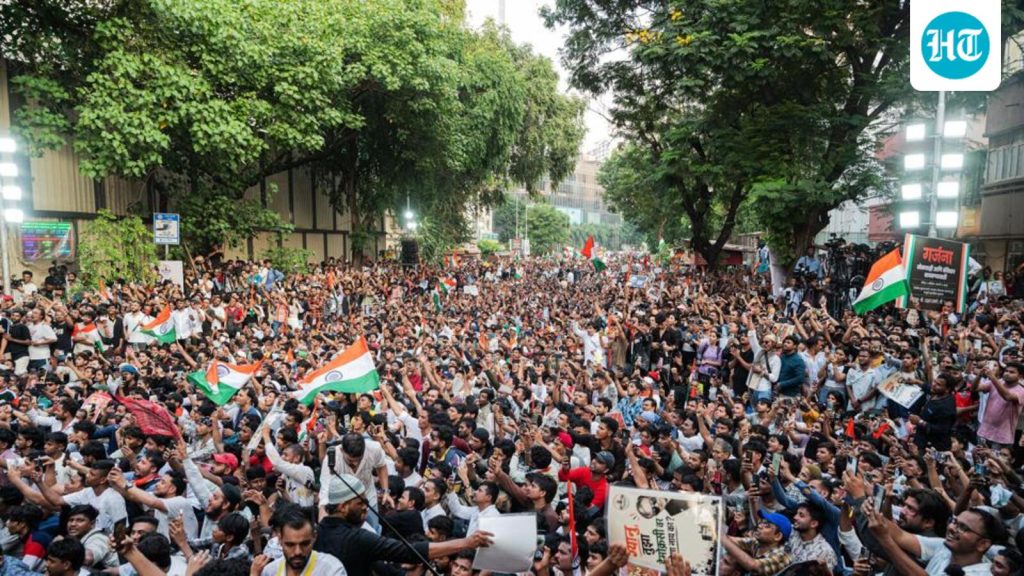
Mumbai protest puts election-roll concerns at centre of political debate
Bharatmorning.com – A large youth-led demonstration at Mumbai’s Shivaji Park has intensified the dispute over electoral-roll revisions, with Maharashtra’s minister of state for home, Pankaj Bhoyar, saying police remained alert to any attempt to disturb public order during the gathering.
The protest took place on Friday under the banner of the Cockroach Janata Party (CJP), despite police not granting permission for it. More than 10,000 people attended, with young participants and members of Gen Z making up much of the crowd. The event focused on allegations of irregularities in voter lists and called for Chief Election Commissioner Gyanesh Kumar to step down.
Student organisations were among those present at Shivaji Park. Actors Shabana Azmi and Naseeruddin Shah, along with singer Vishal Dadlani, also joined the gathering, giving the protest added public visibility.
Police cite vigilance over public order
Speaking in Nagpur on Saturday, Bhoyar said the police administration had monitored the situation closely. He said authorities remain watchful because people seeking to create unrest may try to exploit major public events in Mumbai or elsewhere in Maharashtra.
“I do not think anybody will try to indulge in such anti-social activities. If anybody is found to be involved in disrupting law and order, the police will thwart such an attempt,” he said.
The minister’s remarks placed the focus on security arrangements around the protest rather than on the demands made by demonstrators. Large political gatherings can create pressure on policing agencies to balance the right to assemble with concerns over traffic, crowd management and potential violence. In this case, police scrutiny was heightened because the event went ahead without official permission.
CJP signals broader campaign
CJP founder Abhijeet Dipke told protesters that the Shivaji Park event would be the opening phase of a larger mobilisation. He warned that the campaign could ultimately take the form of a “Jantar Mantar 2.0” if Kumar does not resign.
Dipke said the movement would draw support from young voters and expand beyond Mumbai to other cities before eventually reaching Delhi. His stated demands include Kumar’s resignation, the registration of a criminal case against him and withdrawal of the SIR exercise.
The Election Commission has defended the voter-list revision process and has made changes intended to reduce inconvenience for voters. Electoral-roll updates are a sensitive administrative exercise because they affect who is able to cast a ballot. Debate over such revisions often centres on whether eligible names have been included, removed or altered correctly, and whether people have enough opportunity to check and challenge entries.
For protesters, the issue has become a wider question of confidence in electoral administration. Their slogans at Shivaji Park reflected anger over claims that voter rolls contain irregularities. The Election Commission’s position, however, is that the revision process is being conducted through established procedures, with modifications aimed at easing difficulties for citizens.
Congress joins criticism of BJP and Election Commission
The controversy has also prompted criticism from the Maharashtra Congress, which has targeted both the BJP-led government and the Election Commission of India. Congress leader Nana Patole alleged that names belonging to people of a particular religion had been removed from the electoral roll.
“The ECI has deleted the names of certain religion from the electoral roll. Not only Gyanesh Kumar, but even PM Narendra Modi and Home minister Amit Shah shoudl resign,” demanded Congress leader Nana Patole.
The allegation adds another political dimension to an already charged argument over voter registration. Claims involving deletions from electoral lists carry significant implications because electoral participation depends on voters being correctly registered in their constituencies. Such claims are likely to sharpen calls for transparency, accessible verification processes and clear communication from election authorities.
The Shivaji Park gathering also illustrated how electoral issues are increasingly being taken beyond party offices and formal political forums. The strong presence of students and younger participants showed that questions surrounding voting rights and institutional accountability are being framed as concerns for a new generation of voters.
Whether the CJP’s proposed campaign develops into demonstrations in other cities will depend on its ability to sustain public support and organise peacefully. For the authorities, the immediate task remains maintaining order while allowing democratic dissent to be expressed within the law. For voters, the continuing debate highlights the importance of checking electoral details and using available channels to raise concerns about registration.
Related Reading
Frequently Asked Questions
What is Police kept close watch for anti?
Police kept close watch for anti is the main topic of this guide. The article explains the context, practical details, and next steps readers should understand.
Why does Police kept close watch for anti matter?
Police kept close watch for anti matters because readers are looking for a useful answer, not just a short summary. Good content should match search intent and help them decide what to do next.