
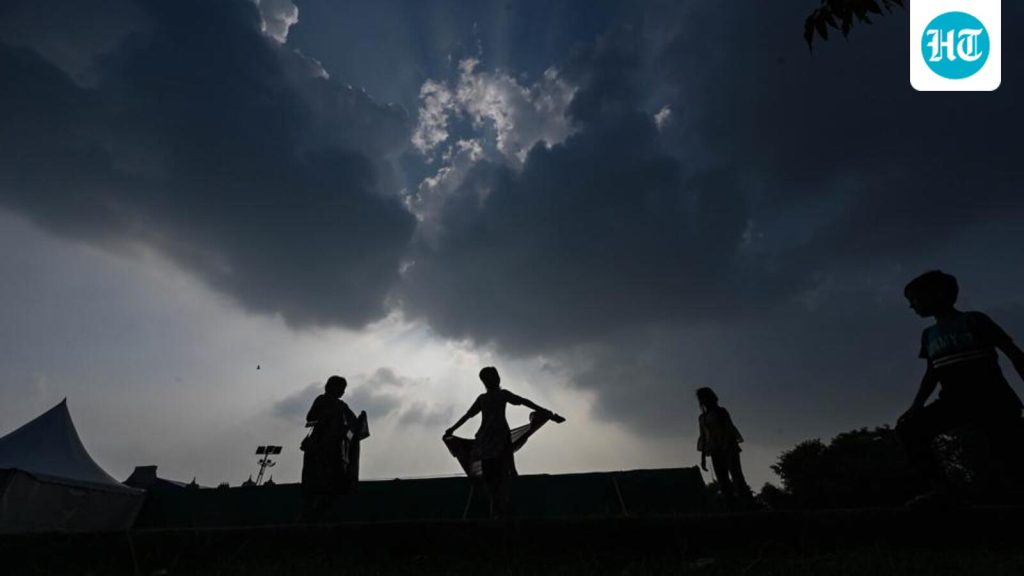
Southwest monsoon set to begin retreat from western Rajasthan around September 19
Bharatmorning.com – The southwest monsoon is likely to start withdrawing from parts of western Rajasthan around September 19, slightly later than its usual retreat date of September 17. The nationwide rainfall shortfall stood at 15% as of September 13, while uneven rain distribution has left several regions facing deficits that may not be fully recovered before the season ends.
Last year, monsoon withdrawal began on September 14. This season has been shaped by a strengthening El Nino, which has affected rainfall patterns across India. Western, southern and northeastern districts have been particularly vulnerable to below-normal precipitation.
“Conditions are becoming favourable for withdrawal of Southwest Monsoon from some parts of West Rajasthan around September, 19, 2026,” IMD said in a statement on Monday.
Rain activity expected before retreat
Even as the monsoon prepares to retreat, several parts of the country may receive a renewed spell of rain during the week. Activity is expected across western and northwestern India, along with sections of the southern peninsula.
A low-pressure system is positioned over southwest Madhya Pradesh, southeast Rajasthan and northern Gujarat. Weather conditions are also being influenced by a trough extending through Jharkhand, Gujarat, Chhattisgarh and Madhya Pradesh, as well as an upper-air cyclonic circulation over the Bay of Bengal near Odisha and West Bengal.
Jammu, Kashmir, Ladakh, Gilgit-Baltistan and Muzaffarabad may see fairly widespread rain from September 15 to 17. Punjab, Haryana and Delhi are likely to receive rain on September 16 and 17, while isolated showers are forecast in both western and eastern Rajasthan during September 15-17. Uttar Pradesh could experience scattered rainfall through September 18.
Mahesh Palawat, vice president at Skymet, said the weather setup supports the start of the withdrawal process by the weekend.
“We expect it to happen by September 20. Some decent rain is likely in the region before that,” he said.
Forecast across southern, central and eastern regions
Southern India is also expected to receive periods of rain. Isolated heavy spells are likely over Tamil Nadu, Puducherry and Karaikal in the coming days. Kerala and Mahe may receive rain until September 16, while south Karnataka could see activity on September 15. Coastal Andhra Pradesh and Telangana are expected to receive isolated heavy rain from September 18 to 20.
Central India may continue to see isolated showers over Chhattisgarh, Madhya Pradesh and Vidarbha until September 20. In the east, West Bengal and Sikkim are likely to receive fairly widespread rain through September 20. Bihar may see rain on September 16 and 17, while Odisha could receive showers between September 19 and 20.
These late-season spells can offer temporary relief in places receiving rain, but they are unlikely to erase the accumulated deficit across many affected states. Monsoon rainfall is especially important for agriculture, reservoirs and groundwater recharge, so the timing and spread of rain matter as much as the national seasonal total.
Deficit narrowed after a weak start, but remains significant
The season began with a steep national shortfall. India’s cumulative monsoon deficit reached 40% in June before widespread July rainfall improved the situation, bringing the deficit to 13% by the end of that month. The gap stood at 14% at the close of August and had widened marginally to 15% by September 13.
Regional figures show a sharper disparity. The south peninsula had the largest broad regional deficit at 28%, followed by east and northeast India at 25%. Central India was 6% below normal, while northwest India recorded a 10% shortfall.
Several major agricultural states remain substantially below normal rainfall. Punjab had a deficit of 40%, Haryana 23%, Rajasthan 25% and Bihar 35%. Karnataka was 29% below normal, Kerala 27%, Telangana 20%, Andhra Pradesh 43% and Tamil Nadu 26%.
The northeast has also faced pronounced shortages. Arunachal Pradesh recorded a 42% deficit, while Meghalaya was 59% below normal. With the monsoon withdrawal period approaching, the prospect of closing these gaps is limited in many of these areas.
Seasonal forecasts had warned of weaker rainfall
Weather outlooks issued during the season had indicated the possibility of below-normal monsoon rain. In its August 31 forecast for September, IMD said rainfall for the month was likely to remain below normal, defined as less than 91% of the long-period average.
Skymet Weather had revised its southwest monsoon outlook on August 17, projecting seasonal rainfall at 85% of the long-period average and placing the probability of drought at 70%. Its initial April forecast had put rainfall at 94% of the long-period average.
IMD’s April outlook had estimated the monsoon at 92% of the long-period average. In June, that projection was revised down to 90%, with a 60% probability assigned to a deficient monsoon season.
The approaching withdrawal from Rajasthan marks the first formal stage of the monsoon’s retreat from the Indian mainland. While rain may continue in other regions for days or weeks, the transition signals that the season is entering its final phase, with attention turning to whether late rainfall can ease local shortages before the monsoon fully recedes.
Related Reading
Frequently Asked Questions
What is Monsoon withdrawal to commence from Sept 19?
Monsoon withdrawal to commence from Sept 19 is the main topic of this guide. The article explains the context, practical details, and next steps readers should understand.
Why does Monsoon withdrawal to commence from Sept 19 matter?
Monsoon withdrawal to commence from Sept 19 matters because readers are looking for a useful answer, not just a short summary. Good content should match search intent and help them decide what to do next.