
India Raises Gulf Concerns in Talks with UAE Foreign Minister
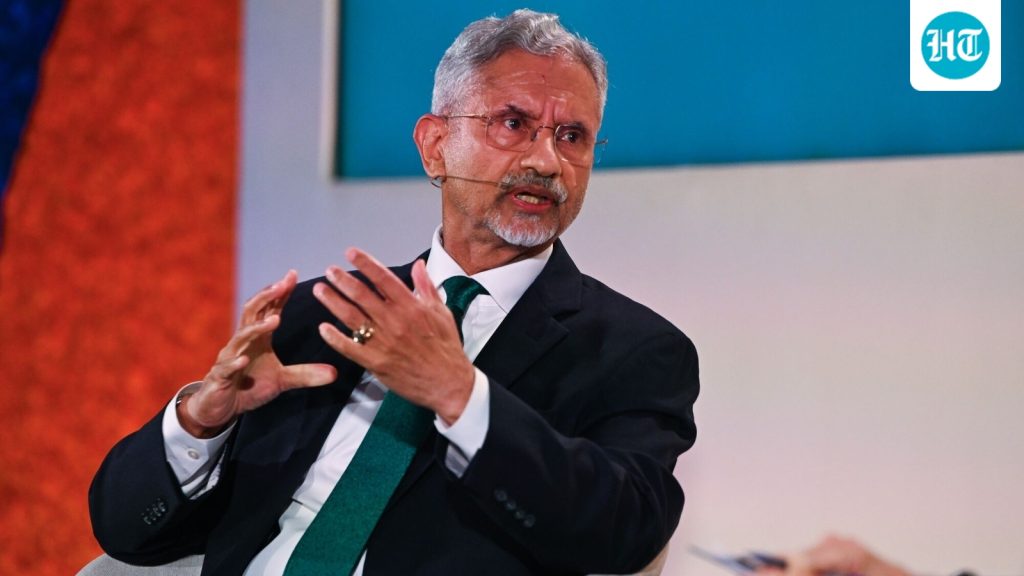
Bharatmorning.com – External affairs minister S Jaishankar has underlined India’s concern about the worsening security climate in the Gulf, stressing the importance of keeping vital commercial routes open during discussions with Sheikh Abdullah bin Zayed Al Nahyan, the United Arab Emirates’ deputy prime minister and foreign minister.
The meeting took place in Mumbai after Sheikh Abdullah arrived in India on an official visit aimed at advancing the close strategic relationship between New Delhi and Abu Dhabi. Their discussions came as instability in West Asia continues to draw attention to the security of sea lanes that carry energy supplies, commodities and other essential goods.
India has strong economic and community ties with the UAE, making regional stability an issue with direct consequences for trade, energy security and Indian citizens living abroad. Jaishankar said India would remain committed to efforts that encourage diplomatic engagement.
The situation in the Gulf remains a matter of deep concern; we will continue to work together and support all efforts to promote dialogue and diplomacy. We continue to support free, safe and unimpeded flow of trade, energy, and fertiliser.
Focus on trade routes and regional stability
The minister’s remarks highlighted the importance India places on uninterrupted access to international shipping corridors. The Gulf region is central to global oil and gas movement, while the Strait of Hormuz remains one of the world’s most important maritime passages. Any disruption in the area can affect shipping schedules, transport costs and the availability of essential imports.
Fertiliser supplies were specifically included in Jaishankar’s comments, reflecting the role of dependable trade channels in agricultural planning and food production. India’s call for secure movement of trade, energy and fertiliser places economic stability alongside the wider need to prevent a further escalation of regional tensions.
For months, tensions involving the United States and Iran have added pressure to an already fragile security environment in West Asia. Concerns have also extended to the Strait of Hormuz, where developments can quickly affect commercial traffic and the broader regional economy.
India’s position, as outlined by Jaishankar, is centered on dialogue and diplomacy. The approach signals support for de-escalation while recognising that conflict in the Gulf has implications well beyond the countries immediately involved.
Jaishankar thanks UAE for support to Indian community
Jaishankar also conveyed appreciation to the UAE leadership for its role in safeguarding the Indian community in the country. The UAE is home to a large Indian diaspora, whose contribution has long formed an important part of the human connection between the two nations.
I would also like to thank you today, and through you, the UAE leadership for ensuring the well-being of the Indian community in the UAE.
The welfare of overseas Indians remains a significant element of India’s engagement with Gulf countries. During periods of heightened regional uncertainty, coordination between governments can be particularly important for maintaining communication, ensuring access to assistance and supporting the daily lives of expatriate communities.
Security alert after missile interception near Riyadh
Regional concerns were underscored on Tuesday when Saudi forces said they had intercepted a Houthi ballistic missile directed toward Riyadh. Turki Al-Malki, spokesperson for the Saudi-led military coalition supporting Yemen’s government in its conflict with the Houthis, said the missile had been destroyed.
The kingdom “intercepted and destroyed a ballistic missile launched by the terrorist Houthi militia towards Riyadh”.
Saudi civil defence also said on X that its National Early Warning Platform had issued an alert in Riyadh because of a possible threat. The episode illustrated the continuing security risks across the region and the importance placed by governments on early-warning systems and civilian preparedness.
Such incidents add to the pressure on regional diplomacy. They also reinforce why India and the UAE are discussing both political stability and the practical protection of trade, energy and people moving across the region.
Visit reflects expanding India-UAE partnership
Sheikh Abdullah arrived in Mumbai on Monday and was received by Mangalprabhat Lodha, Maharashtra’s minister for the Skill Development Department. The visit was welcomed by the Ministry of External Affairs as a further sign of the regular high-level engagement between India and the UAE.
MEA spokesperson Randhir Jaiswal said the visit would contribute to the Comprehensive Strategic Partnership shared by the two countries. Jaishankar, welcoming Sheikh Abdullah in Mumbai, said he looked forward to their talks.
The India-UAE relationship has developed across trade, investment, energy, technology, connectivity and people-to-people links. Regular ministerial engagement gives both sides an opportunity to address immediate regional developments while also advancing longer-term cooperation.
Against the backdrop of uncertainty in the Gulf, the Mumbai discussions carried a broader message: India and the UAE see continued communication, secure commerce and diplomatic engagement as essential to regional stability. For India, ensuring that critical supplies can move without obstruction remains closely connected to domestic economic interests and the well-being of its citizens overseas.
Related Reading
Frequently Asked Questions
What is Jaishankar voices concern over Gulf situation?
Jaishankar voices concern over Gulf situation is the main topic of this guide. The article explains the context, practical details, and next steps readers should understand.
Why does Jaishankar voices concern over Gulf situation matter?
Jaishankar voices concern over Gulf situation matters because readers are looking for a useful answer, not just a short summary. Good content should match search intent and help them decide what to do next.