
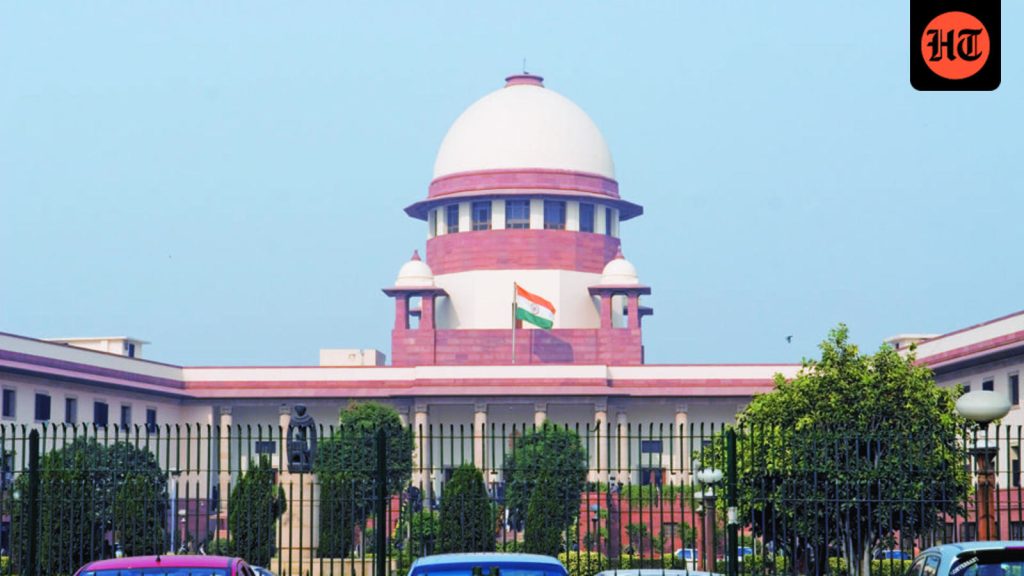
Data Protection Law Challenge Before Supreme Court
Bharatmorning.com – The data protection law challenge before the Supreme Court has brought renewed focus to the need to protect both personal privacy and press freedom in India. The court issued notice on a petition by the Digital News Publishers Association (DNPA) questioning provisions of the Digital Personal Data Protection Act, 2023, and rules introduced under it in 2025.
A three-judge bench comprising Chief Justice of India Surya Kant and Justices Joymalya Bagchi and V Mohana sought responses on the petition, including a request for interim relief. The matter is scheduled for hearing on November 17.
Privacy and journalism must be balanced
The court indicated that privacy rights and the media’s freedom to report cannot be treated as opposing interests. It noted that ordinary citizens have enforceable rights over personal information, while journalists must retain space to report on issues of public importance.
“There will be rights of innocent citizens, and then there is your right. A balance has to be struck,” CJI Kant said.
The bench asked the DNPA to help identify safeguards that could prevent misuse of personal data in the name of journalism. The observation underlines the central question in the data protection law challenge: how can the law curb unjustified use of personal information without preventing legitimate investigative reporting?
Publishers question consent requirements
Senior advocate Madhavi Divan, appearing for the DNPA, said the petition was the first comprehensive challenge by what she described as “legacy media”. She argued that consent requirements could seriously affect how newsrooms gather information.
According to the association, journalists cannot always seek permission from the subject of an investigation before collecting or processing relevant information. This may be especially difficult in reports involving public authorities, corporate conduct, official decisions or allegations that require independent scrutiny.
“News has to be new…what is the point if I have to ask for permission and consent?” Divan said.
Divan argued that such requirements could create a form of prior restraint, leaving journalists unable to pursue a story until affected individuals had been approached or had consented. She also submitted that media organisations already operate within regulatory frameworks, including the Press Council of India, and can be held accountable for inaccurate reporting.
The court, however, stressed that the issue could not be considered only from the publishers’ perspective. Any legal framework, it said, must also ensure that people have remedies where their privacy is breached.
RTI amendment is also under scrutiny
The petition also challenges Section 44(3) of the DPDP Act, which amended Section 8(1)(j) of the Right to Information Act, 2005. The DNPA has argued that the amendment removes an earlier safeguard allowing disclosure of personal information when a larger public interest justified it.
The association says this could restrict access to records important for public accountability. Its concern is that privacy claims may be used to withhold information connected to public power, official conduct or other matters that affect citizens.
The outcome of the data protection law challenge could shape the way news organisations, public authorities and citizens navigate privacy, transparency and reporting in India.
Frequently Asked Questions
What is the data protection law challenge about?
The petition challenges parts of India’s Digital Personal Data Protection Act, 2023, and related rules. The DNPA says the framework may not provide adequate protection for journalism carried out in the public interest.
Why are news publishers concerned about consent?
Publishers argue that requiring consent before collecting or processing information could make investigations difficult, particularly when a report concerns people or institutions that may not wish to cooperate.
How could this affect the Right to Information Act?
The petition raises concerns about the amendment to Section 8(1)(j) of the RTI Act. The association says the change may make it harder to obtain information that is personal in nature but also relevant to public accountability.