
KGMU Opens Uttar Pradesh’s First DNA Fingerprinting Laboratory in a Medical Institution
Bharatmorning.com – King George’s Medical University in Lucknow has launched a DNA fingerprinting facility designed to strengthen forensic casework, molecular diagnostics and medical research in Uttar Pradesh. The laboratory, established within the department of forensic medicine and toxicology, is described as the first of its kind at a medical institution in the state.
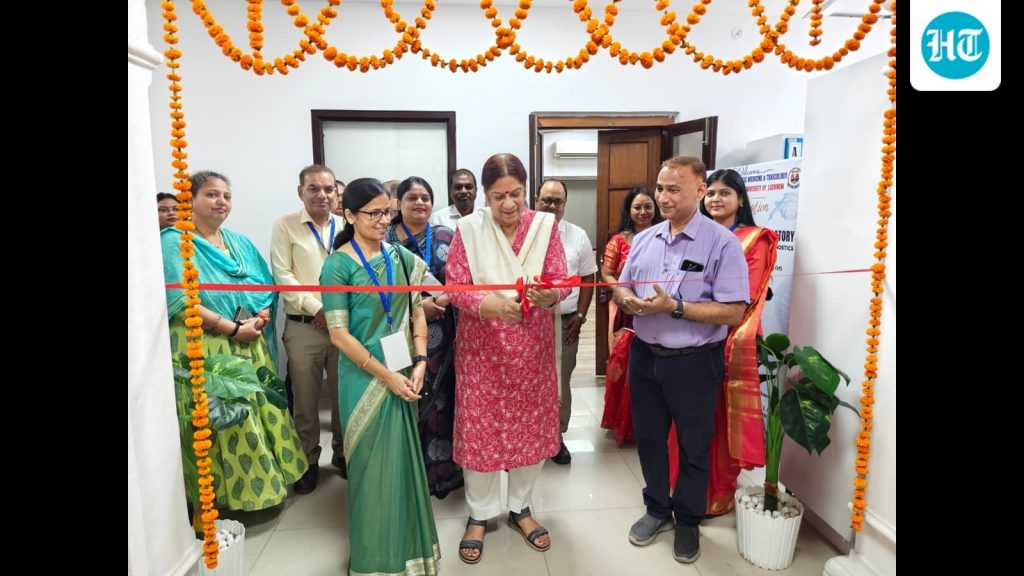
Vice-chancellor Prof Soniya Nityanand inaugurated the new DNA Fingerprinting Laboratory – Forensic Genetics and Molecular Diagnostics on Friday. The facility is expected to provide scientific support in cases where biological evidence is central to establishing identity or clarifying family relationships.
DNA profiling is widely used to compare genetic material obtained from samples such as blood, tissue, bone, hair roots or other biological evidence. In forensic settings, it can help investigators connect evidence with individuals, identify victims and support the examination of cases that have remained unresolved.
Support for Identification and Forensic Investigations
The KGMU laboratory will be used for identifying unidentified bodies, locating missing persons through genetic comparison and assisting in the identification of disaster victims. It will also be relevant in paternity-related disputes and sensitive hospital cases involving suspected accidental swapping of newborns.
The availability of a dedicated laboratory within a medical university could help bring forensic expertise, clinical knowledge and laboratory-based genetic testing closer together. Such work requires careful collection, testing and interpretation of samples, particularly when results may contribute to legal proceedings or the confirmation of a person’s identity.
Prof Nityanand also pointed to the laboratory’s possible role in research. One area of interest is chimerism analysis after bone marrow transplantation. In such situations, genetic testing may be used to examine the presence of cells originating from different genetic sources, an important consideration in post-transplant evaluation.
Training Focus on STR-Based Testing
A two-day practical workshop on forensic DNA profiling is being held on October 23 and 24 alongside the laboratory’s opening. The programme brings together researchers, postgraduate resident doctors, faculty members and forensic professionals for training in core steps involved in DNA analysis.
Participants are receiving hands-on instruction in DNA extraction, polymerase chain reaction amplification, short tandem repeat profiling and interpretation through a genetic analyser. STR testing examines specific repeated regions in human DNA and is commonly used because the resulting pattern can be highly useful for distinguishing between individuals.
The laboratory’s work will concentrate on three broad areas: research and innovation, teaching and professional training, and STR-based molecular diagnostics. Dr Anshu Priya, associate professor in KGMU’s forensic fingerprinting unit, highlighted these areas as central to the facility’s planned activities.
For students and specialists, access to a laboratory environment can provide direct experience with the techniques behind forensic reports. It also underscores that DNA evidence depends not only on sophisticated equipment, but on sound laboratory practice, accurate interpretation and proper handling of samples from the point of collection onward.
Experts Join the Workshop
The workshop includes contributions from forensic and academic specialists. Among the experts participating are Dr Pankaj Srivastava from the Forensic Science Laboratory in Jabalpur, Prof Gyaneshwer Chaubey of Banaras Hindu University, and Dr Jwala Kumar Nand from the Jharkhand Forensic Science Laboratory.
Prof Anoop Kumar Verma, who heads KGMU’s department of forensic medicine and toxicology, described DNA profiling as a significant scientific resource for forensic investigation. Its use may be particularly valuable in pending matters where biological evidence can offer fresh leads or help verify earlier findings.
KGMU spokesperson Prof KK Singh said the university is the first medical institution, whether government-run or private, to create a DNA fingerprinting laboratory. He noted that private collection centres in Lucknow currently obtain samples locally but send them to testing facilities in Pune and Hyderabad.
A Step Toward Local Genetic Testing Capacity
The new facility gives KGMU a local platform for work that combines forensic genetics with medical diagnostics and academic training. For families seeking identification of a missing relative, clinicians dealing with complex diagnostic questions, or investigators examining biological evidence, DNA testing can provide an additional scientific tool when used within appropriate legal and ethical procedures.
By placing the laboratory inside a major medical university, KGMU has created a setting in which forensic medicine, laboratory science and clinical research can intersect. The initiative is expected to support both immediate forensic needs and longer-term training for professionals working with genetic evidence in Uttar Pradesh.
Related Reading
Frequently Asked Questions
What is UP s 1st DNA fingerprinting lab?
UP s 1st DNA fingerprinting lab is the main topic of this guide. The article explains the context, practical details, and next steps readers should understand.
Why does UP s 1st DNA fingerprinting lab matter?
UP s 1st DNA fingerprinting lab matters because readers are looking for a useful answer, not just a short summary. Good content should match search intent and help them decide what to do next.