
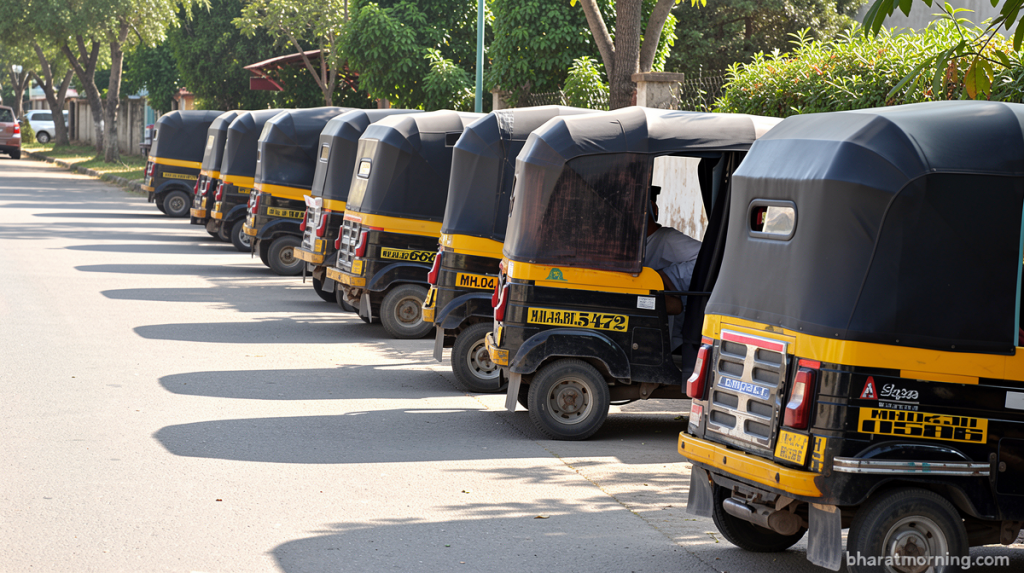
Mumbai’s Streets Get Pricier: Auto and Taxi Fares Jump After 18-Month Freeze
Bharatmorning.com – Commuters across Mumbai and its sprawling suburban belt woke up to a steeper price tag on Tuesday as the city’s auto-rickshaws and black-and-yellow cabs moved to higher tariff slabs. The adjustment, long anticipated by driver unions and quietly anticipated by regulators, closes an 18-month window during which fares had remained frozen despite climbing fuel bills and maintenance outlays.
What Changed and When
The Mumbai Metropolitan Region Transport Authority (MMRTA) sanctioned the new rates following a formula-based recommendation from the four-member Khatua panel. That panel weighs fuel costs, vehicle operating expenses, and other economic variables before proposing a tariff revision. Under the revised structure, auto-rickshaw passengers now face a minimum charge of ₹27 for the first 1.5 kilometres, while black-and-yellow taxi riders must pay ₹33 for the same opening distance. The per-kilometre rate for autos, previously set at ₹17.14, has been recalculated to ₹18.22 and rounded down to ₹18 for every kilometre beyond the initial stretch. Taxis saw a ₹2 increase; autos absorbed a Re 1 bump.
The revision applies across the entire MMR footprint — Mumbai city proper plus the adjoining urban and semi-urban localities that fall under the authority’s jurisdiction. It supersedes the last adjustment, which took effect on February 1, 2025 and had raised both auto and taxi fares by ₹3 each.
Why the Revision Was Inevitable
Driver associations representing both auto-rickshaw and taxi operators had pressed repeatedly for a tariff reset, citing sustained upward pressure on compressed natural gas (CNG) prices, tyre and spare-part costs, and periodic vehicle inspections. With the vast majority of the region’s 4.5-plus lakh auto-rickshaws and more than 50,000 black-and-yellow cabs running on CNG, fuel expenditure constitutes the single largest line item in a driver’s daily cost sheet. An 18-month freeze, even in a period of moderate inflation, effectively eroded real earnings for operators who bear the full weight of vehicle depreciation, insurance, and licensing fees.
The Khatua panel’s methodology is designed to insulate the revision from political timing. By anchoring the formula to observable cost inputs rather than ad hoc political judgment, the authority aims to produce a tariff that neither overcompensates drivers nor leaves them subsidising their own livelihoods. The panel’s recommendation, once adopted, becomes binding across all MMR jurisdictions simultaneously.
Compliance Window and Meter Recalibration
Regulators have granted drivers a three-month grace period, running through the end of November, to have their electronic fare meters recalibrated to the new tariff schedule. Until that recalibration is complete, operators may lawfully charge the revised rates by displaying the Regional Transport Office (RTO)-approved fare table inside the vehicle. An official confirmed the arrangement, adding that drivers who fail to update their meters within the stipulated window will be subject to penalties under existing transport regulations.
“Drivers can charge the revised fares either after calibrating their electronic fare meters or by displaying the RTO-approved fare table,” the official stated.
The grace period reflects the logistical reality of recalibrating hundreds of thousands of meters across a metropolitan area the size of Mumbai’s. Meter shops, RTO inspection centres, and driver cooperatives will all see elevated demand over the coming weeks. Passengers should expect a transitional phase in which some vehicles display the old meter reading while the driver points to a printed tariff sheet.
Broader Context: Mumbai’s Transport Economics
Mumbai’s public-transport ecosystem is layered: suburban rail, BEST buses, metro lines, and a dense network of autos and cabs that fill the first- and last-mile gaps. Autos, in particular, remain the default short-haul option for millions of daily commuters who travel between residential pockets and railway stations, office clusters, and commercial districts. A ₹27 minimum fare for 1.5 km places the entry price roughly in line with inflation-adjusted levels seen in comparable Indian metros, though Mumbai’s traffic density and parking constraints keep per-kilometre costs above those of cities with more open road geometry.
The black-and-yellow taxi segment, smaller in fleet size but serving longer inter-district and airport runs, carries a structurally higher minimum fare. The ₹33 entry charge for the first 1.5 km, combined with the revised per-kilometre rate, means that a typical airport-to-suburb journey will see a modest but measurable increase in total cost. For regular users, the cumulative effect across multiple daily trips can add several hundred rupees to a monthly transport budget — a figure that will shape household decisions about mode choice, particularly for lower-income commuters weighing autos against shared-ride apps or walking segments.
What Passengers Should Expect
From Tuesday onward, any auto or taxi operating within the MMR is authorised to collect the new rates. Riders should verify that the meter or the displayed tariff sheet reflects the revised schedule before beginning a journey. Disputes over fare calculation during the recalibration window are likely; keeping a note of the pickup point, drop point, and meter reading at trip end can help resolve disagreements quickly. The MMRTA and RTO helplines remain available for fare-related grievances.
The next scheduled review cycle will again be driven by the Khatua panel’s cost formula. If fuel prices stabilise or fall, the interval before the next revision could stretch beyond the current 18-month gap. Until then, the ₹27 and ₹33 minimums, along with the ₹18 per-kilometre auto rate, define the pricing landscape for Mumbai’s streets.
Related Reading
Frequently Asked Questions
What is Mumbai auto taxi fares rise?
Mumbai auto taxi fares rise is the main topic of this guide. The article explains the context, practical details, and next steps readers should understand.
Why does Mumbai auto taxi fares rise matter?
Mumbai auto taxi fares rise matters because readers are looking for a useful answer, not just a short summary. Good content should match search intent and help them decide what to do next.