
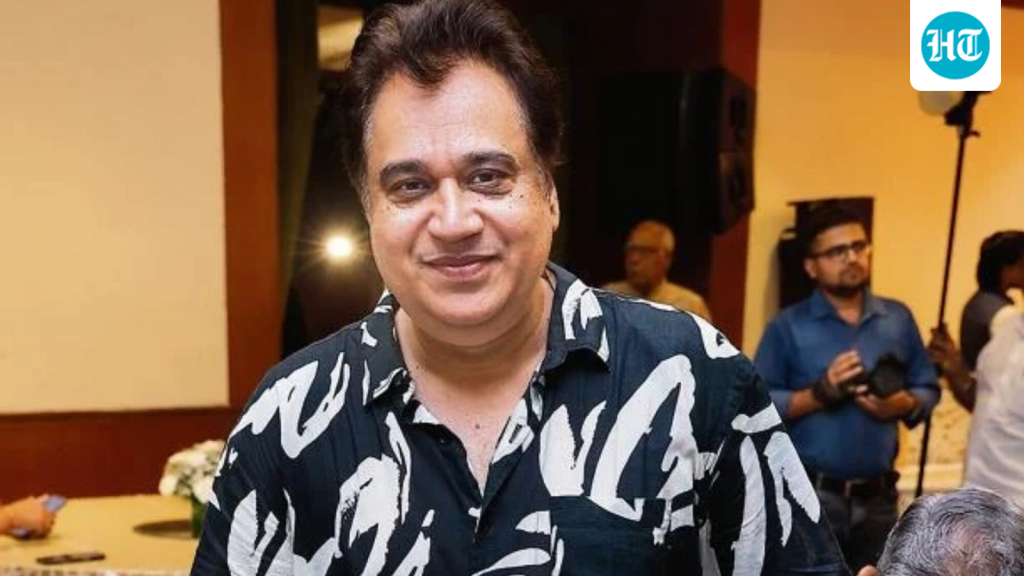
Manu Rishi Chadha’s Delhi memories return with the Ramlila season
Bharatmorning.com – For Manu Rishi Chadha, the arrival of Navratri brings back the sights, sounds and family warmth of Old Delhi’s Ramlila evenings. The actor, who grew up in the historic part of the Capital, remembers both watching the performances with his family and eventually stepping onto the stage himself.
Recently seen in the web series Operation Safed Sagar, the 55-year-old says he still feels deeply connected to those childhood experiences. This year, he hopes he might be able to return to Delhi and watch Ramlila again, revisiting a tradition that remains emotionally important to him.
“Is saal kaash aa paun yahan wapas Ramlila dekhne. Main bahut miss karta hoon unn dino ko (when I used to visit) Ramlila with my family. Main unn memories se aaj bhi emotionally attached hoon.”
His involvement was not limited to the audience. Chadha once performed as a vanar in productions organised by Shri Dharmic Leela Committee and Shri Sanatan Dharm Leela Samiti. His family would be seated among the spectators, cheering him on from the crowd.
“I played a vanar in Ramlilas organised by Shri Dharmic Leela Committee and Shri Sanatan Dharm Leela Samiti, and my family used to sit among the audience and applaud enthusiastically.”
Old Delhi, remembered through its flavours
Delhi visits, for Chadha, begin with food. His memories of the city are closely tied to its familiar eating spots, especially the flavours he associates with Old Delhi and its surrounding neighbourhoods. Even while describing his preferred dishes, he appears to relive the experience of eating them.
“Sabse pehle aate hain Nand ke chhole bhature; usmein woh jo do tukde aloo ke rakhte hain… uff, mazedaar! Phir aate hain Nathu’s (in Bengali Market) ke chowmein. Then, Chandni Chowk ki taraf, Karim’s mein (non-veg).”
His food knowledge became especially useful during the making of the 2018 film Rajma Chawal, when he developed a reputation as a dependable guide for the late actor Rishi Kapoor. Early call times did not dampen their enthusiasm for the area’s food. If the team arrived for work at 5.30am, the prospect of Old Delhi delicacies was part of the day’s anticipation.
Among the items they sought out were Lotan ke chhole, jalebis from Dariba Corner, and dahi bhallas from Natraj. Karim’s was their choice for non-vegetarian food. When the group included vegetarians, bedmi aloo was a particular favourite of Kapoor’s.
These details reveal why food has such a strong place in Chadha’s image of Delhi. The dishes are not simply recommendations; they are markers of friendship, film sets, long workdays and the city’s enduring ability to turn an ordinary meal into a memorable occasion.
A return to theatre in the Capital
Although screen work occupied much of Chadha’s recent professional life, he has returned to the stage with Window Tak Aashiqui. He brought the play to Delhi for the IHC Theatre Festival 2026. Set in the Capital, the production gives him another way to engage with a city he knows through its streets, flavours and personal associations.
Theatre also prompted him to reflect, with humour, on audience habits in Delhi. He remembers an incident from an earlier production in which a visitor arrived after the play had already been underway for 10 minutes and asked whether the performance could be taken back to the beginning.
“Humare play ko shuru hue 10 minutes hogaye thhe, aur ek audience member ne bola, ‘Bhaisahab, thoda sa peechhe se restart karenge?’ Bechare theatre pehli baar dekhne aaye thhe, unhe laga remote se peechhe aage ho sakta hai! Fortunately some audience members explained it does not work like that. But it was damn funny!”
The anecdote may be playful, but its point is clear: live performance moves in real time. Unlike a film or streaming programme, a play cannot be paused, rewound or restarted for a late arrival. Chadha’s simple request to theatre audiences is therefore practical as well as affectionate.
“Time se aajaya karo, yaar!”
Festivities and a concern for Delhi’s air
Navratri and the broader festive period also bring another familiar Delhi issue into focus: air pollution. Chadha believes the discussion around smog need not remain confined to political arguments. For him, it could be approached with greater feeling and responsibility.
“Agar ye kiya hota toh kab ka smog khatam ho gaya hota.”
His concern shapes the way he thinks about celebrations involving firecrackers. He feels that many people in Delhi are likely to continue using them, describing the city with characteristic candour.
“Mujhe lagta hai Dilli mein abhi bhi bahut log patakhe jalaate honge. Delhi ziddi logon ka shehar hai.”
Chadha says he has stopped bursting crackers and has ensured that his children do not do so either. His position places a personal choice alongside a larger civic concern: cherished festivals can retain their emotional meaning while residents reconsider practices that add to the city’s seasonal air-quality strain.
For the actor, Delhi remains a layered homecoming—Ramlila stages, applauding family members, early-morning food trails, theatre audiences and an evolving city that he still addresses with warmth. His nostalgia is rooted not in a single place or event, but in the many small experiences that continue to make the Capital feel personal.
Related Reading
Frequently Asked Questions
What is Navratri 2026?
Navratri 2026 is the main topic of this guide. The article explains the context, practical details, and next steps readers should understand.
Why does Navratri 2026 matter?
Navratri 2026 matters because readers are looking for a useful answer, not just a short summary. Good content should match search intent and help them decide what to do next.