
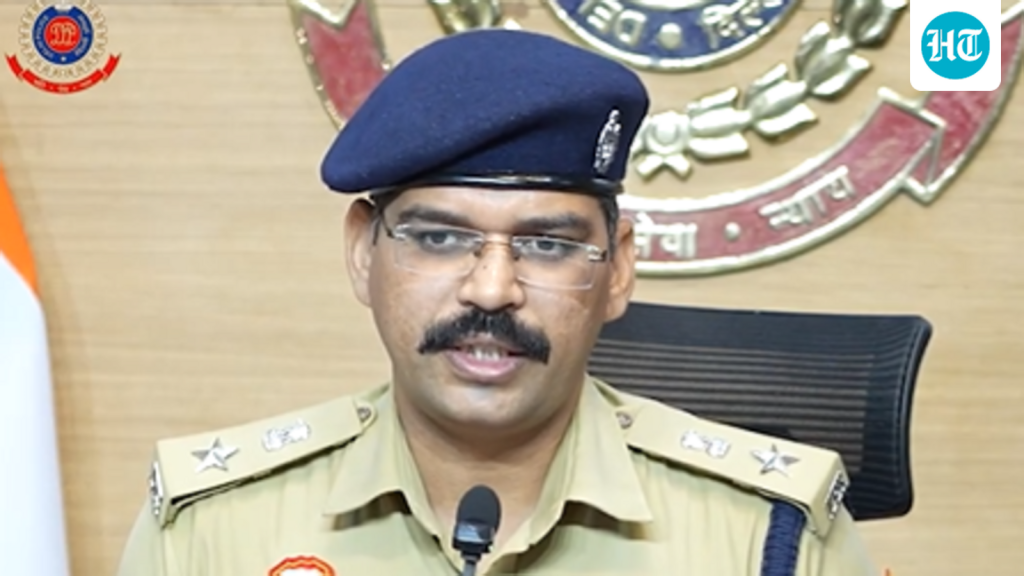
Haryana man held over AI-generated posts targeting Delhi Police officer
Bharatmorning.com – Delhi Police have arrested a 24-year-old man from Haryana’s Palwal district after AI-generated reels and posters were circulated online portraying a police officer sexually harassing a woman journalist during protests in central Delhi.
The material was presented on social media as authentic CCTV footage from the protest site, despite being fabricated. Investigators say the posts included manipulated images involving assistant commissioner of police Vivek Bhagat, who had faced an allegation of sexual harassment from a woman during the protest held on Saturday near Jantar Mantar.
Content circulated as purported CCTV footage
The protest was organised by the Cockroach Janta Party, or CJP, amid demonstrations linked to the Election Commission of India. Police monitoring teams identified objectionable posts on Instagram and Facebook that appeared designed to resemble surveillance-camera images from the location.
In one of the posters flagged by investigators, a police officer was depicted touching a woman inappropriately during the protest. The image was framed as though it were a still from a CCTV recording, potentially giving viewers the impression that it documented a real incident.
Police said such fabricated visuals can spread rapidly when presented in the format of supposed surveillance footage. The appearance of a timestamped or camera-style image may lead users to treat unverified material as evidence, particularly during a politically charged public gathering.
Instagram channel launched ahead of protests
Additional deputy commissioner of police for the New Delhi district, Manjeet Sheoran, identified the arrested man as Nadeem Ahmad. Ahmad, a Class 10 dropout, had started an Instagram account named “news_aaina0776” in April or May this year, ahead of the CJP protests at Jantar Mantar.
The account had gathered more than 24,000 followers, police said. Its audience size is now part of the inquiry because content shared through an established channel can reach thousands of people before it is independently checked or removed.
Ahmad was arrested on October 5. During initial questioning, police said he indicated that the fabricated content was created on October 3 and circulated the following day.
“Ahmad’s interrogation revealed that his motive behind creating and circulating the fabricated and objectionable images of a police officer was to tarnish the image of the Delhi Police, create unrest and incite the protesters to attack the police,” Sheoran said.
Investigation focuses on possible wider network
Investigators are examining whether anyone else was involved in producing or amplifying the posts. Police are also looking into the source of any funding connected with the material and whether the circulation formed part of a planned effort to provoke protesters and trigger violence.
The inquiry remains focused on the origin of the AI-generated visuals, the accounts used to distribute them and any possible coordination behind the posts. Officials are seeking to determine whether Ahmad acted alone or had associates involved in preparing, sharing or promoting the content.
The case highlights the growing challenge posed by artificial intelligence tools that can create convincing-looking images and videos. Visual material once treated as strong evidence can now be altered or generated entirely, making verification especially important when posts concern allegations of misconduct, public protests or confrontations involving law-enforcement personnel.
For readers encountering claims presented as CCTV footage, basic caution remains essential. Images and short videos can be reposted without their original context, while AI-generated material may imitate familiar news formats, security-camera frames and official-looking visuals. A high follower count or rapid circulation does not establish that a post is genuine.
The allegation involving ACP Vivek Bhagat and the separate investigation into the fabricated posts are linked by the content circulated online, but the police case against Ahmad concerns the alleged creation and dissemination of AI-generated images. Authorities have not treated the manipulated visuals themselves as authentic documentation of events at the protest.
As the investigation proceeds, police are expected to continue reviewing digital evidence and examining the reach of the posts across platforms. The case underscores how quickly misinformation can shape public perceptions during a tense gathering, especially when it invokes serious accusations and uses fabricated imagery to make those accusations appear visually verified.
Related Reading
Frequently Asked Questions
What is Haryana man 24 arrested for deepfake?
Haryana man 24 arrested for deepfake is the main topic of this guide. The article explains the context, practical details, and next steps readers should understand.
Why does Haryana man 24 arrested for deepfake matter?
Haryana man 24 arrested for deepfake matters because readers are looking for a useful answer, not just a short summary. Good content should match search intent and help them decide what to do next.