
Congress Questions Election Commission’s SIR Process Despite Unanimity Claim
Bharatmorning.com – The Congress has argued that unanimous decisions by the Election Commission of India do not, by themselves, establish that the Special Intensive Revision of electoral rolls was carried out within the law. The party’s response followed an affidavit submitted by the Election Commission before the Supreme Court, in which the poll body said its three members had jointly approved every decision connected with the exercise.
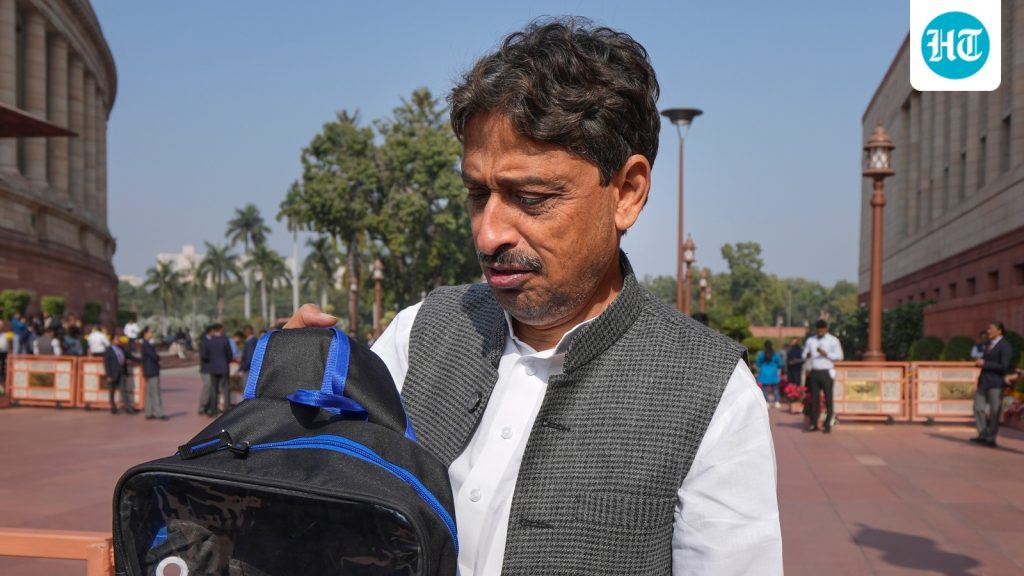
Congress leader Imran Masood said the central concern was not simply whether the Chief Election Commissioner acted alone, but whether the procedures governing voter enrolment and deletion were properly followed. He called for the Supreme Court to examine the relevant official records.
“The Supreme Court should summon all the relevant records. Even if all three agreed, the core issue remains ‘Form 6’,” Masood said.
Form 6 is the statutory application used by eligible citizens seeking to register as new voters. The document has become a major point of contention in the dispute over the Special Intensive Revision, or SIR, of electoral rolls. Electoral rolls are the official lists that determine who is eligible to vote, making the process of adding, correcting, or removing entries especially significant for voters and political parties.
ECI Rejects Claims of Unilateral Action
In its affidavit before the Supreme Court, the Election Commission said all SIR-related decisions had been approved unanimously by its three commissioners. The submission rejected allegations that Chief Election Commissioner Gyanesh Kumar had acted independently or that the commission had breached the legal framework governing its internal decision-making.
The commission also disputed the claim that it had changed statutory Form 6. It maintained that an additional declaration sought during the revision process was issued separately through its own orders and did not amount to an amendment of the prescribed enrolment form.
The distinction matters because statutory forms are tied to election law and established procedures, while administrative directions may set out additional requirements for a particular exercise. The disagreement therefore turns on both the content of the declaration and the authority under which it was introduced.
Congress Focuses on Enrolment and Deletion Concerns
Masood said collective approval could not remove questions about whether a decision was arbitrary or procedurally improper. In his view, unanimity is not a substitute for compliance with the rules.
“The question is whether the decision was taken in accordance with the rules,” he said.
He further questioned whether an action should be treated as lawful merely because every Election Commissioner supported it.
“If all three act arbitrarily, does that mean the decision is no longer arbitrary?”
Responding to whether the affidavit weakened the Opposition’s position, Masood said the concerns remained unresolved. He pointed to Form 6 and the deletion of voter entries as the issues that required scrutiny.
“The question is about Form 6. The question is about the deletion of votes. How has the issue been resolved? The issue is not the Election Commissioner. The issue is vote theft.”
Voter-list revisions are intended to keep electoral rolls accurate by registering eligible voters, correcting details and removing entries that no longer qualify. At the same time, the exercise can attract intense political scrutiny because errors or disputed deletions may affect an individual’s ability to participate in an election. The present disagreement highlights the importance of clear procedures, accessible documentation and mechanisms through which voters can raise objections.
Rahul Gandhi Announces November 1 Rally
As the legal and political debate continues, Congress leader Rahul Gandhi has announced a “Save the Vote – Save the Country” march and rally at Delhi’s Ramlila Maidan on November 1. In a post on X, he urged people to participate and said the party would oppose what it describes as the theft of votes.
“Our votes are being stolen, and we will not tolerate this quietly under any circumstances,” Gandhi said.
The clash places attention on two connected questions: how the Election Commission conducted the Special Intensive Revision, and whether the safeguards around voter registration and deletion were adequate. The commission’s affidavit addresses the allegation of unilateral decision-making by asserting that all three members acted together. Congress, however, insists that the broader test is whether the process itself complied with the applicable rules.
For voters, the dispute reinforces the practical importance of checking electoral-roll entries and using the available process to seek registration, corrections or restoration where necessary. For the Supreme Court, the matter may require examination of the records and procedures cited by both sides before deciding whether the commission’s actions met the required legal standard.
Related Reading
Frequently Asked Questions
What is Unanimity doesn t mean rules were?
Unanimity doesn t mean rules were is the main topic of this guide. The article explains the context, practical details, and next steps readers should understand.
Why does Unanimity doesn t mean rules were matter?
Unanimity doesn t mean rules were matters because readers are looking for a useful answer, not just a short summary. Good content should match search intent and help them decide what to do next.