
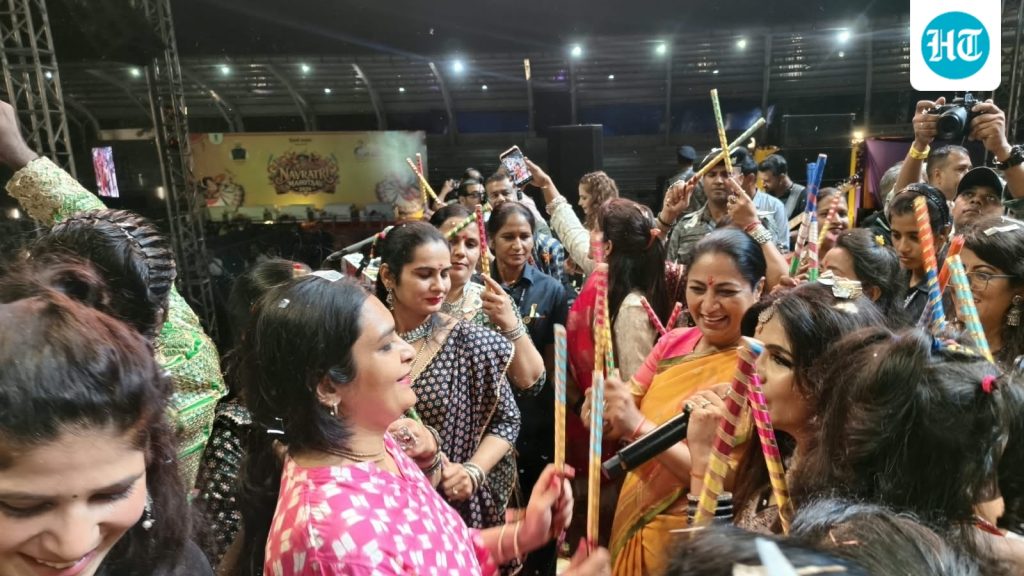
Navratri celebrations draw thousands as Delhi’s Dandiya festival comes to a close
Bharatmorning.com – Thousands of people gathered at Chhatrasal Stadium on Sunday as Delhi’s three-day Dandiya/Navratri Festival 2026 concluded with music, folk dance and festive food. Held during Navratri, the programme created a public space for visitors to take part in celebrations associated with one of India’s most widely observed festival periods.
The event was organised with support from Delhi Tourism and the Delhi government. Its final evening brought the festival’s dance, music and culinary experiences together after three days of activities at the stadium.
Chief Minister joins concluding programme
Delhi Chief Minister Rekha Gupta inaugurated the festival and later attended the closing event as chief guest. Delhi Tourism Minister Kapil Mishra and Delhi Tourism managing director Sunil Anchipakka were also present for the concluding programme.
The presence of senior representatives underlined the festival’s cultural focus: encouraging participation in Indian folk traditions within a large public gathering. Dandiya, closely linked with Navratri festivities, was central to the experience, alongside musical performances and other elements of the celebration.
For attendees, the festival offered more than a performance to watch. Visitors were able to participate in a setting designed around movement, music, food and shared celebration. Such events can make traditional practices more accessible to people who may encounter them in community venues rather than only in family or neighbourhood settings.
Teachers and young people take centre stage
The final day was dedicated to teachers, with educators and young people participating in the programme. Their involvement became a defining feature of the closing celebrations, bringing together different generations through a cultural event built around dance and traditional festivities.
The focus on teachers and youth placed the festival’s cultural purpose in a practical setting. Folk music and dance traditions are often experienced most directly through participation, and the programme gave attendees an opportunity to engage with those forms in a festive, public environment.
Young participants joined educators and other visitors as the three-day schedule reached its conclusion. The programme highlighted their role in the celebration while maintaining the broader Navratri theme that ran throughout the event.
Dance, music and food shape the festival atmosphere
Music and dance formed the heart of the festival, while food stalls and culinary offerings added another dimension to the visitor experience. The mix allowed attendees to move between performances, participation and refreshments during the celebrations at Chhatrasal Stadium.
Navratri is associated with a range of regional cultural expressions, and Dandiya is among the festive dance forms that invite collective involvement. The Delhi programme used that participatory quality to bring visitors together around traditional music, dance and food.
Rather than treating folk culture as a distant or formal display, the festival presented it as an active community experience. The gathering encouraged people to share in the rhythms and rituals of the season while enjoying a recreational outing with family, friends, teachers and fellow visitors.
A public platform for festive heritage
The organisers positioned the festival as an effort to promote India’s folk dance, music and festive heritage. By staging the programme at Chhatrasal Stadium, the event gave these cultural activities a visible public platform during Navratri.
The three-day format also allowed visitors to return across the festival period and experience different aspects of the programme. Dance, music and food remained key attractions, while the concluding day added a special emphasis on educators and younger participants.
Public cultural events can create opportunities for people from varied backgrounds to engage with traditions in a shared setting. At this festival, that engagement took the form of Dandiya celebrations, musical activity, food experiences and the collective energy of Navratri.
With Sunday’s closing programme, this year’s Dandiya/Navratri Festival at Chhatrasal Stadium reached its end. The event left behind a three-day celebration centred on participation, traditional art forms and the festive spirit that brought thousands of visitors to the venue.
Related Reading
Frequently Asked Questions
What is Delhi s three day Dandiya festival?
Delhi s three day Dandiya festival is the main topic of this guide. The article explains the context, practical details, and next steps readers should understand.
Why does Delhi s three day Dandiya festival matter?
Delhi s three day Dandiya festival matters because readers are looking for a useful answer, not just a short summary. Good content should match search intent and help them decide what to do next.