
Ancient objects reveal how magic once shaped daily life
Bharatmorning.com – An exhibition examining the roots of magic brings together wands, inscribed tablets, figurines and amulets to show that supernatural practice in antiquity was far more than entertainment or illusion. Cursed! The Power of Magic in the Ancient World, which opened at the Toledo Museum of Art in Ohio before travelling to New York, explores how people in early civilizations used ritual and sacred objects to confront danger, illness, death and uncertainty.
The show contains 75 works drawn from regions including Ancient Egypt, Mesopotamia, Greece, Rome and the wider Mediterranean. Their dates span thousands of years, with some reaching back about 4,500 years to Egypt. Loans from institutions including the British Museum, the Louvre and New York’s Metropolitan Museum of Art contribute to the display.
“The idea of magic is likely as old as mankind itself,” says Jeffrey Spier, curator of Cursed! The Power of Magic in the Ancient World.
Over five years, Spier assembled artefacts that trace changing ideas about invisible forces and human attempts to influence them. Rather than presenting magic as a fringe belief, the exhibition suggests it was woven into ordinary life: people sought protection for children, treatment for sickness, help in love, and remedies against perceived enemies.
Protection for mothers, children and homes
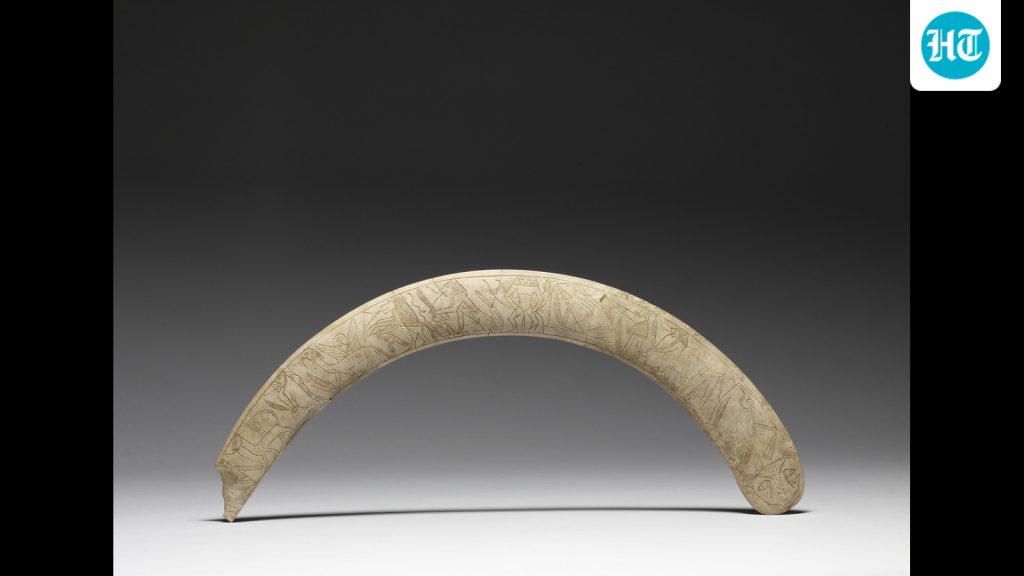
Several objects focus on pregnancy and infancy, moments when families may have felt especially exposed to danger. Ivory wands from Ancient Egypt were marked with protective texts and images. Their carvings included threatening deities armed with weapons, along with guardian figures such as Taweret, the pregnant hippopotamus goddess associated with childbirth. Phrases including “Protection of day” and “Protection of night” appeared on these pieces, which were probably worn by mothers.
Another strand of protection appears in the image of Humbaba. In Mesopotamian mythology, and in the Sumerian Epic of Gilgamesh, Humbaba is the giant guardian of a holy forest and an opponent eventually killed by Gilgamesh. Yet his fearsome face also held ritual power. Masks bearing this image could function as charms, either placed in houses or worn on the body to repel malevolent spirits.
Amulets also served as defenses against a demon-goddess from Mesopotamian belief who was thought to threaten pregnant women. Such protective pieces commonly showed her with wings, a lion’s head and bird-like talons. Their inscriptions called on multiple deities to keep the “exalted lady” at a distance from mothers and babies.
Spells, healing and sacred force
The exhibition shows how closely magic and medicine could overlap. Egyptian tablets depicting the child god Horus overcoming beings associated with disease or evil were covered with healing formulas and protective words. Water was poured over tablets of this kind and then consumed by sick people who hoped for relief or safety.
A Roman practice used engraved semiprecious stones to similar ends. Images of Graeco-Egyptian gods, including the lion-headed serpent Chnoubis, were carved into gems. Chnoubis was associated with healing ailments, while Greek inscriptions added divine names and chants. The combination of Egyptian, Greek and Roman traditions offers a vivid example of cultural exchange in the ancient world.
“The eclectic blending of Egyptian, Greek and Roman cultures is remarkable evidence of ancient globalisation,” says Spier.
The Egyptian deity Heka provides another key to the exhibition’s argument. Depicted in pharaonic dress and holding a staff entwined by two twisted serpents, Heka connected magic, healing and the life force known as ka. Ancient Egyptians believed this force enabled gods and human beings to bring about events. Creating life, treating illness and directing curses against enemies could all be understood as expressions of Heka’s power.
The statue is also significant because it points to an early effort to define and organize magical knowledge. Heka appears in religious and funerary material as well as medical writing, underscoring the way ritual practice crossed categories that are often separated today.
Desire, conflict and the need for control
Spier, formerly a senior curator of antiquities at the J. Paul Getty Museum, has spent decades studying Greek and Roman magic. One of the enduring revelations for him is its reach across society.
“The most surprising aspect, I suppose, is how widespread it was. Many individuals turned to magicians for love, or cursing.”
In Ancient Greece, amulets could be used not only to avert harm but also to win another person’s affection. Meanwhile, curse objects expressed frustration, rivalry and conflict. One clay “curse figure” in the exhibition was commissioned by a pharaoh to direct a hex at a foreign ruler. The object makes clear that ritual power was imagined not merely as private protection, but as a means of acting against adversaries.
Lead curse tablets were widespread in the Greek world. Soft lead was valued for its perceived capacity to bind. Users inscribed a name or complaint with a stylus, then folded the tablet as part of the ritual process. The material itself therefore carried meaning alongside the written words.
A group of eight Mesopotamian tablets further demonstrates the scale of ritual knowledge. Together they contain nearly 100 spells, refer to exorcists and provide directions for a ceremony held during a single night in the month of Abu, corresponding to July and August. This was a period when spirits were believed to move between the human realm and the netherworld, leaving them especially open to spoken formulas.
Viewed together, the objects offer a record of people seeking agency in an unpredictable world. Their methods differ from modern ideas of science or medicine, but the concerns behind them remain recognizable: protecting a family, recovering from illness, seeking love, grieving the dead and finding ways to cope with threats beyond one’s control.
Related Reading
Frequently Asked Questions
What is Hex marks the spot?
Hex marks the spot is the main topic of this guide. The article explains the context, practical details, and next steps readers should understand.
Why does Hex marks the spot matter?
Hex marks the spot matters because readers are looking for a useful answer, not just a short summary. Good content should match search intent and help them decide what to do next.