
Albanian Woman’s Long Life Spans Empires, War and Five Generations
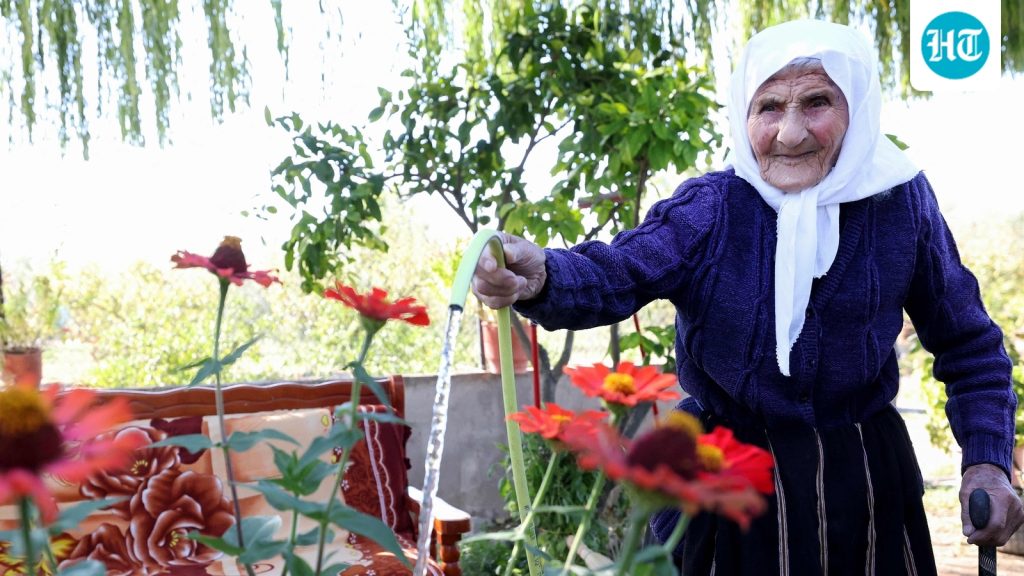
Bharatmorning.com – In the quiet village of Ferras in southern Albania, Qamile Marra’s days still begin with familiar work: sweeping the courtyard, watering flowers, feeding chickens and enjoying a coffee. At 117, she may be older than any other living woman, yet the prospect of a world record does not appear to be what occupies her mind.
Marra was born on August 19, 1909, a date recorded in several official documents held by her family. If confirmed through the required verification process, that birthday would place her two days ahead of Ethel Caterham of Britain, who is recognised by Guinness World Records as the world’s oldest living woman.
For Marra, the significance of such a claim is secondary to the life she continues to lead in the place she has called home for nearly all of her years. Ferras lies about 100 kilometres, or 60 miles, south of Albania’s capital. There, surrounded by relatives, gardens and an orchard, she has witnessed changes few people can imagine.
A Life Across Albania’s Defining Eras
Her lifetime has crossed periods of Ottoman rule, the conclusion of World War II and Albania’s decades under a communist dictatorship. The country around her has changed repeatedly, but her own outlook remains tied to daily routines, family connections and the landscape of rural southern Albania.
“Life is beautiful, like Mount Tomorr in bloom,”
she said while sitting outside her home, smiling beneath a traditional white headscarf. Mount Tomorr, a prominent mountain in central Albania, offers an image that captures the warmth and simplicity with which Marra speaks about life.
“You live as long as God has decreed,”
she said, expressing no interest in offering a formula for longevity.
Claims involving people over the age of 110 can be difficult to establish. Historical civil records are not always complete, particularly in places affected by war, political change or limited documentation systems. Questions surrounding age verification have also drawn attention after a study that received the 2024 Ig Nobel prize examined weaknesses in recordkeeping and possible pension fraud in areas known for unusually large numbers of very old residents.
Marra’s family, however, has collected records that consistently identify the same birth date. They include a birth certificate issued in 1945, a passport from 1978 and a recently issued identity card. Her relatives have also contacted Guinness World Records in hopes of having her age formally reviewed.
Even Pension Officials Needed Convincing
Marra’s exceptional age once created a more practical difficulty. Her son Hysen, now 80, said pension payments were halted after his mother turned 100 because local officials doubted she was still alive. He had to provide proof, including statements from witnesses, before the payments resumed.
“They didn’t believe my mother was still alive,”
Hysen recalled.
The episode reflects one challenge faced by exceptionally old people and their families: a remarkable age can sometimes seem improbable enough to create bureaucratic hurdles. Earlier this month, Marra received a special state pension from the government in recognition of her age.
Her family life has remained central throughout the years. Marra’s husband died 36 years ago, but she still remembers their marriage warmly. Their union had been arranged, as was common in many communities of their era, though she describes the life they shared as happy.
Since then, she has watched five generations of her family grow. The losses accumulated over more than a century can still bring visible emotion, especially when she recalls friends and relatives who are gone. At the same time, smaller moments retain their power: a phone call from a niece can quickly lift her spirits.
“I’ve watched them get engaged, marry and build their own homes and lives,”
she said.
Routine, Fresh Air and Family
Marra has spent much of her life growing food and caring for animals. She still walks through the orchard she tends alongside Hysen, who lives with her. During those walks, she picks ripe pomegranates and keeps basil leaves in her pockets simply to enjoy their scent.
Her son believes this close connection to a modest rural life may have helped sustain her. He says she has never gone to a doctor. Marra herself does not identify one food, exercise or routine as the reason she has lived so long. Her answer is less about a secret than an acceptance of ordinary life as something worth appreciating.
One photograph has accompanied her through the decades. Taken almost a century ago, it shows Marra as a young woman in a white scarf resembling the headscarf she wears today. The image links the woman tending flowers in Ferras with the young Albanian woman who began life before many of the defining events of the modern age.
Whether or not Guinness ultimately confirms her as the world’s oldest living woman, Marra’s story is already extraordinary. Her years encompass upheaval, personal loss, marriage, family growth and the everyday tasks that continue to shape her days. In Ferras, the question of a title seems far less important than the next walk through the orchard, the scent of basil and another morning coffee.
Related Reading
Frequently Asked Questions
What is Lived through Ottoman rule end of WWII?
Lived through Ottoman rule end of WWII is the main topic of this guide. The article explains the context, practical details, and next steps readers should understand.
Why does Lived through Ottoman rule end of WWII matter?
Lived through Ottoman rule end of WWII matters because readers are looking for a useful answer, not just a short summary. Good content should match search intent and help them decide what to do next.