
How does police in India approach policing during protests?
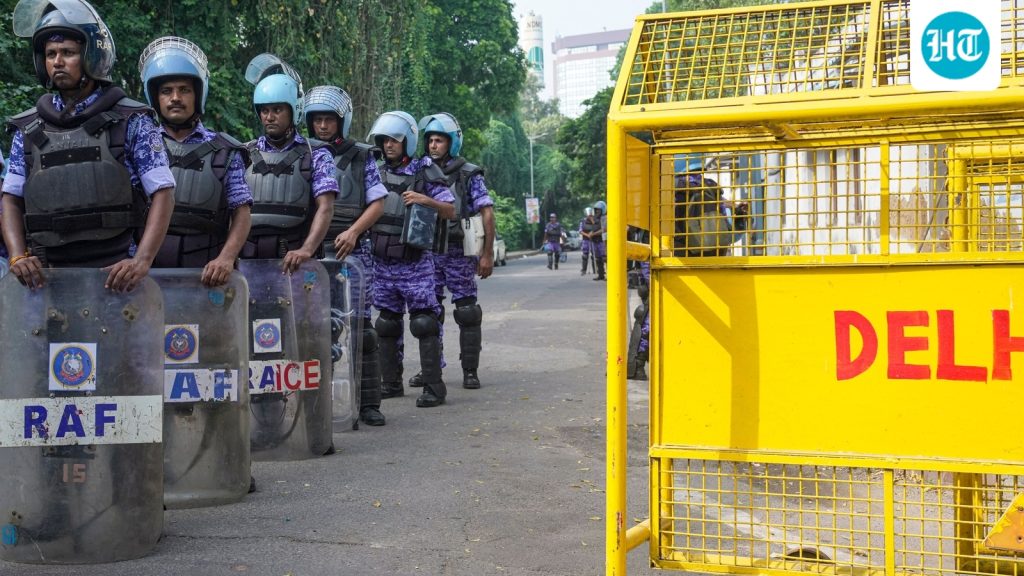
Bharatmorning.com – How does police in India approach policing when large protests take place? Demonstrations in Delhi in July and again earlier this month led to allegations against police and paramilitary personnel. Protesters and Opposition leaders raised concerns about officers not displaying name tags, the use of facial-recognition technology for surveillance, disproportionate force in crowd control, and indiscriminate detentions. The government was blamed for many of these incidents, while police personnel said they were dealing with large groups and that some people were attempting to provoke violence.
The debate highlights a wider question about policing in India: how can authorities maintain public order while protecting the rights of people who assemble and protest? Police action during a tense gathering is shaped by the immediate situation, available personnel, training, equipment, institutional culture and the assessment of whether violence may occur. These factors can make crowd-control decisions difficult, but they also make accountability and clear procedures essential.
Training, force and accountability in policing
A series of studies on policing in India suggests that some of the concerns seen during protests may be connected to gaps in crowd-control training and to beliefs among some police personnel that can justify the use of force. When a crowd is large and fast-moving, officers may have to make decisions quickly. Yet the need for speed does not remove the importance of restraint, identification and lawful conduct.
Name tags, for example, are important because they allow the public to identify officials and seek accountability when necessary. Questions over surveillance technologies, including facial recognition, also raise concerns about privacy, oversight and whether their use is proportionate to the situation. Similarly, detention and dispersal measures can have serious consequences for individuals, especially when they are applied broadly during a protest.
How does police in India approach policing fairly in such circumstances? A central answer lies in preparation. Better training can help personnel distinguish between peaceful participants and those who may be trying to cause harm. It can also strengthen the use of de-escalation, communication and proportionate responses before force becomes necessary. Clear operational guidance can support officers on the ground while giving citizens greater confidence that their rights will be respected.
What policing surveys show
Useful evidence on these issues comes from baseline surveys conducted since 2018. Their findings have been published in the Status of Policing in India Reports, or SPIR. The surveys were conducted by Lokniti-Centre for the Study of Developing Societies and Common Cause, with philanthropic support from Tata Trusts and the Lal Family Foundation.
These reports provide a way to examine policing beyond individual incidents. They draw attention to questions around training, public perceptions, working conditions and the attitudes that can influence police behaviour. Such research matters because policing is not limited to responding to a single protest or crisis. It affects daily interactions between citizens and the state, including how people experience safety, fairness and access to justice.
For policymakers, the findings point to the need for sustained investment in training and systems of accountability. For police leadership, they underline the value of clear instructions and support for personnel operating under pressure. For the public, they offer a basis for discussing reform through evidence rather than only through competing political claims.
Why the approach to policing matters
The question of how does police in India approach policing is especially important in a democracy where public protest is a visible part of political life. Law-enforcement agencies have a responsibility to prevent violence and protect people and property. At the same time, peaceful protesters must not be treated as a threat simply because they gather in large numbers or express disagreement with the government.
A balanced approach requires police to act lawfully, transparently and with restraint. It also requires institutions to investigate credible allegations and learn from failures. Stronger crowd-management training, identifiable personnel and careful scrutiny of surveillance and detention practices can help reduce mistrust while allowing police to respond to genuine risks.
FAQ: Policing and protests in India
Why are name tags important for police personnel during protests?
Name tags help identify officers and make accountability possible. When allegations arise, clear identification can assist complaints, inquiries and public confidence in the policing process.
What concerns are raised about facial-recognition surveillance?
Concerns include privacy, oversight and whether surveillance is being used proportionately. Public debate often focuses on how such technology is deployed, who is monitored and what safeguards are in place.
What can improve crowd control during demonstrations?
Training, communication, de-escalation and clear procedures can help officers respond more effectively. These measures can support public safety while reducing the risk of unnecessary force or broad detentions.
Effective policing during protests requires both public-order management and respect for the rights of people exercising their democratic voice.