
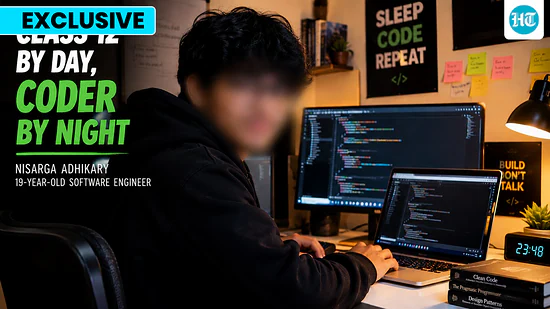
Exclusive: How a Class 12 student became a techie at 19, ‘breached’ CBSE portal
Bharatmorning.com – Nisarga Adhikary, a 19-year-old who recently finished Class 12, has already made waves in the tech world by working with startups, contributing to open-source software, and engaging in cybersecurity research. These accomplishments, he asserts, give him the right to refer to himself as a “software engineer” before even stepping into a college classroom.
Adhikary recently drew national attention after claiming to have discovered significant security flaws in the Central Board of Secondary Education’s (CBSE) On-Screen Marking (OSM) portal. The teenager’s claims, coupled with his young age, sparked a mix of admiration and skepticism online. While some praised his technical prowess, others questioned whether a high school graduate could truly be called a software engineer.
During an interview with Hindustan Times, Adhikary was asked how he justifies labeling himself a software engineer despite being only 19 and having completed his schooling. “It’s possible to be both. I’ve been coding since I was a child,” he explained. His early engagement with programming, he said, laid the foundation for his current skills, which he believes are more important than formal degrees.
Adhikary revealed that he had collaborated with multiple startups and contributed to open-source projects before finishing school. He described himself as a “founding engineer” and mentioned working on initiatives for venture capital-backed companies. “I’ve worked as a founding engineer and also been part of some large startups that received funding from venture capitalists,” he stated.
His curiosity about the CBSE OSM system began when he noticed intense criticism of the digital evaluation platform. “In February, when exams were underway, CBSE announced they would use OSM this year. The media was full of complaints,” Adhikary recalled. Students reported issues such as blurred scans, missing pages, and discrepancies in re-evaluation processes, which fueled his interest in how the platform functioned.
Adhikary claimed he accessed the portal through publicly shared CBSE documents and began analyzing its frontend code. “I looked at the code that loads when you open the portal,” he said. “It raised questions about data security, processing methods, and the accuracy of mark allocation.” This process led him to identify vulnerabilities, including what he called a “master password” that could potentially bypass authentication and access examiner accounts.
The teenager emphasized that his lack of a formal engineering degree did not diminish his technical capabilities. “I don’t think a degree is necessary to be an engineer. It’s about the skills you have,” he argued. Drawing parallels to tech pioneers, he cited Mark Zuckerberg as an example. “Many successful founders drop out of college. Zuckerberg built Facebook without a degree, and he’s still considered a visionary,” Adhikary noted.
Adhikary’s revelations have intensified debates about the reliability of the CBSE OSM system. While he alleges major security weaknesses, the board has dismissed the claims, stating that the vulnerabilities were limited to a testing website using sample data. “The actual portal wasn’t compromised. The issues were found in a mock environment,” CBSE clarified.
Despite the board’s response, Adhikary’s actions have underscored a growing public concern over the digital evaluation process. His ability to navigate the system and uncover potential flaws has positioned him as a self-taught tech expert. “I don’t call myself a graduate, but I do call myself a software engineer,” he reiterated, highlighting his confidence in his abilities.
Adhikary’s story reflects a broader trend of young innovators challenging traditional educational hierarchies. By contributing to open-source projects and working with startups, he has built a portfolio that rivals many college graduates. His confidence in his work, however, has also drawn criticism from those who argue that formal education provides essential structure and expertise.
As the controversy surrounding the CBSE OSM portal continues, Adhikary’s achievements serve as a reminder of the power of self-directed learning. His journey from a Class 12 student to a self-proclaimed software engineer challenges conventional notions of expertise and highlights the potential for young talent to make a mark in the tech industry. “I’m not just a student anymore. I’m a creator and a problem solver,” he said, encapsulating his perspective on the matter.
Adhikary’s contributions to the tech field are not limited to cybersecurity. His work with startups and open-source initiatives has allowed him to gain practical experience in software development, user interface design, and data management. “I’ve worked on various projects that required both technical and creative thinking,” he added, underscoring his adaptability and passion for technology.
While the CBSE maintains that the vulnerabilities Adhikary identified are not critical, the incident has prompted discussions about the need for more rigorous testing and transparency in digital evaluation systems. “Students and parents deserve to know how their results are being processed. If there’s a flaw, it affects their trust in the entire process,” Adhikary said, emphasizing the importance of accountability.
Adhikary’s story is also a testament to the changing landscape of education. With the rise of online learning and self-guided projects, young individuals are increasingly bypassing traditional paths to develop expertise in specialized fields. His ability to work with complex systems at such a young age has inspired some to question the value of formal degrees in the digital age.
As he prepares for the next stage of his journey, Adhikary remains focused on pushing the boundaries of what’s possible. Whether his claims about the CBSE OSM portal are fully validated or not, his actions have already sparked a conversation about the intersection of youth, innovation, and the future of education. “I believe in continuous learning and real-world application,” he concluded, a sentiment that defines his approach to both technology and life.
Adhikary’s case exemplifies a growing movement of self-taught tech professionals who are redefining success in the digital era. His work with startups and open-source projects has not only showcased his abilities but also demonstrated his capacity to tackle real-world problems. The CBSE controversy, while significant, is just one chapter in his evolving narrative as a young innovator.
For now, Adhikary continues to advocate for transparency in digital systems. His claims about the OSM portal have prompted the education board to review its processes, even as some remain skeptical about the extent of the vulnerabilities he uncovered. “The goal is to improve the system, not just criticize it,” he said, reflecting his desire to contribute to meaningful change.
As the discussion around his achievements gains momentum, Adhikary’s story serves as an inspiring example of how talent and determination can transcend traditional educational frameworks. His journey from a Class 12 student to a recognized tech talent at 19 highlights the potential for young individuals to lead the way in innovation and problem-solving.
“I don’t think engineering, like you don’t need a degree to be an engineer.”
Adhikary’s perspective underscores a shift in how technical skills are perceived. While some may still debate his title, his work has demonstrated that practical experience and creativity can be as valuable as academic credentials. As the digital world evolves, his story may become a symbol of the new generation of self-driven learners and innovators.
His actions have not only placed him in the spotlight but also raised questions about the future of education. In an age where online resources and collaborative platforms empower individuals to learn independently, Adhikary’s achievements challenge the notion that formal education is the sole path to expertise. “I’m just a young person who’s passionate about technology,” he said, embodying the spirit of a self-made professional.
As the CBSE OSM system undergoes further scrutiny, Adhikary’s role as a young critic and innovator remains pivotal. His ability to identify vulnerabilities and communicate his findings has brought attention to the importance of security in digital evaluations. Whether or not his claims are entirely accurate, they have sparked a much-needed dialogue about the integrity of the system and the need for ongoing improvements.
For Adhikary, the experience has been transformative. “It’s been a journey of learning and discovery. I’m excited about the challenges ahead,” he said. His story, while unconventional, is a powerful reminder that the boundaries of expertise are constantly expanding. As he moves forward, his impact on the tech community and education sector is likely to grow, making him a figure worth watching in the coming years.
Adhikary’s narrative also highlights the role of curiosity in driving innovation. By questioning how the CBSE OSM system handled data and marks, he took the initiative to investigate and uncover potential issues. “Curiosity is the foundation of any breakthrough,” he said, a philosophy that has guided his work in the tech field.
With his achievements, Adhikary has become a symbol of the new breed of young professionals who are reshaping industries through their dedication and ingenuity. His journey from a high school student to a self-proclaimed software engineer is a compelling example of how the digital age has created opportunities for talent to flourish, regardless of age or formal qualifications.