
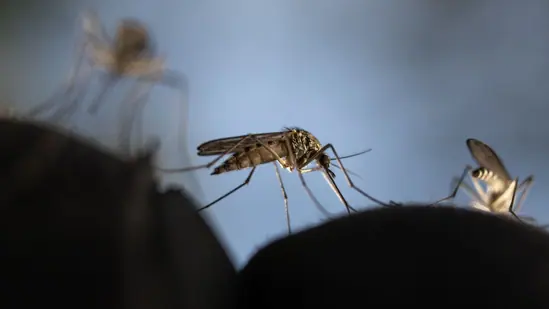
Google Plans to Deploy 32 Million Bioengineered Mosquitoes in California and Florida for Disease Control
Bharatmorning.com – Google has submitted proposals to US regulatory agencies for a groundbreaking public health program that involves the gradual release of up to 32 million genetically modified mosquitoes in key regions of California and Florida. The initiative, designed to combat disease transmission, focuses on using bacteria to alter mosquito behavior and reduce their ability to reproduce. This method, known as a sterile insect technique, aims to curb populations of mosquitoes responsible for spreading illnesses like Zika, dengue, and West Nile virus.
The strategy relies on releasing mosquitoes infected with a specific bacteria, which disrupts their reproductive systems. By targeting areas with high mosquito activity, scientists hope to create a sustainable approach that complements traditional insecticides. This initiative marks a significant shift in vector control, emphasizing biological solutions over chemical ones to address growing concerns about pesticide resistance and environmental impact.
Implementation will unfold over two years, with careful planning to ensure the process is both effective and safe. Initial releases will occur in localized zones, allowing researchers to monitor outcomes before expanding the program. This phased approach is intended to minimize ecological disruptions while maximizing the potential for long-term population reduction.
A Study Reveals Mosquitoes Adapt to Repellents Over Time
Researchers have uncovered a concerning trend in mosquito behavior through a recent experiment detailed in the Journal of Experimental Biology. The findings suggest that mosquitoes can develop a learned association between the scent of common insect repellents and the presence of food, which may reduce the repellents’ effectiveness in the long run. This insight has sparked renewed interest in alternative methods for mosquito control, such as the use of bacteria-infected insects.
“The results imply that mosquitoes are not repelled by the chemical itself, but by how they interpret this chemical information,” explained Claudio Lazzari, lead author of the study, to AFP. “This highlights the complex ways in which insects can adapt to environmental signals.”
During the study, scientists repeatedly exposed mosquitoes to the smell of a widely used repellent while offering them a sugar-based food source. Over time, the insects began to recognize the scent as a reward, leading them to bite individuals treated with the same repellent instead of avoiding them. This behavioral shift underscores the need for innovative strategies that go beyond reliance on conventional repellents.
The program is part of a broader push to develop novel solutions for mosquito-borne disease prevention. By combining genetic modification with ecological monitoring, Google aims to address the limitations of current methods while reducing the ecological footprint of pest control efforts. The project also aligns with global trends toward biocontrol technologies, which are increasingly seen as a viable alternative to chemical interventions.
Regulatory Oversight and Environmental Safeguards
Before proceeding, authorities will review extensive data on the safety of the released mosquitoes, including their potential impact on local ecosystems. Environmental impact assessments will evaluate how the bacteria-infected insects interact with native species and whether their presence could disrupt food chains or pollination patterns. Monitoring plans will also be scrutinized to ensure the program can adapt based on real-world outcomes.
Google has committed to a two-year trial phase, during which it will track data on mosquito population changes, disease transmission rates, and any unintended ecological consequences. This period will allow scientists to refine their approach and address any challenges that arise. If the trial proves successful, the program could be scaled up to other regions facing similar public health threats.
Author Profile: Shweta Kukreti
Shweta Kukreti, a seasoned journalist with over eight years of experience in Indian and global politics, has become a key figure in the coverage of US-related issues. Joining the Hindustan Times in 2024, she now serves as Deputy Chief Content Producer, focusing on topics such as US politics, immigration policy, and major international events. Her work is characterized by meticulous research, strategic team coordination, and a commitment to delivering data-driven narratives that resonate with diverse audiences.
Kukreti’s career has spanned several prominent media outlets, including the Indian Express, HTDS, ANI, and Republic World. Her contributions have been recognized by senior editors across these organizations, who have praised her ability to contextualize complex issues for readers. In addition to her professional achievements, she has earned accolades for her comprehensive coverage of US political developments, including the Digi Star Award at the Hindustan Times within her first year of employment.
Her educational background includes a BA (Hons.) in Political Science and a master’s degree from Delhi University, alongside a PG Diploma in English Journalism from the Indian Institution of Mass Communication (IIMC). Kukreti has also completed a diploma in Women’s Empowerment and Development from IGNOU University and a French language certification through the Alliance Française de Delhi. These qualifications reflect her dedication to both linguistic precision and cultural awareness in her reporting.
Outside of work, Kukreti finds inspiration in the natural landscapes of Rishikesh and Himachal Pradesh, where she enjoys hiking and outdoor adventures. She is an avid sports enthusiast, participating in badminton, volleyball, and chess. Her passion for spiritual practices further enriches her perspective, enabling her to approach stories with a balanced and insightful lens.
The initiative represents a convergence of technological innovation and public health strategy. By leveraging bioengineered mosquitoes, Google seeks to address the dual challenges of disease transmission and environmental sustainability. As the program progresses, it will serve as a critical test of how biological interventions can reshape the landscape of pest control in the 21st century.