
Delhi to Step Up “No PUC, No Fuel” Checks From October 1
Bharatmorning.com – Delhi is preparing to enforce its “No PUC, No Fuel” rule more strictly from October 1, making a valid Pollution Under Control certificate essential for motorists seeking fuel in the city. The measure is part of a broader effort to reduce vehicle-related emissions and treat air-quality management as a year-round responsibility rather than a seasonal response.
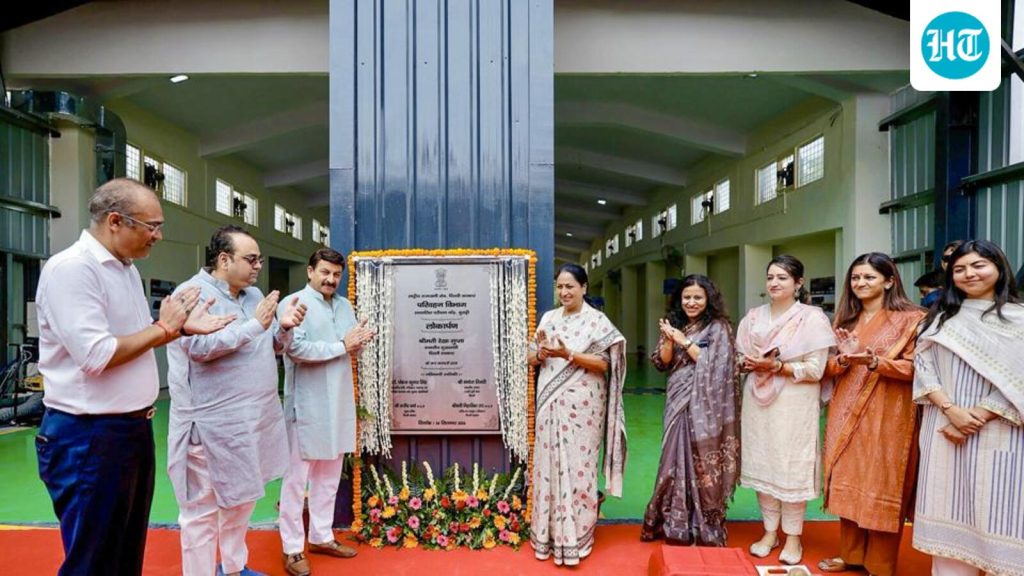
Chief minister Rekha Gupta announced the intensified enforcement while opening a new Automated Testing Station in Burari on Saturday. The facility, described as one of the country’s largest automated vehicle-testing centres, has five testing lanes and can examine as many as 100,000 vehicles each year.
Vehicles that do not carry a current PUC certificate will be refused fuel under the policy. The initiative was actively implemented during Delhi’s severe winter pollution period in December 2025 and was later retained as a permanent measure. Its enforcement, however, has not been consistent, making the October 1 push significant for vehicle owners and fuel stations alike.
“Temporary measures taken only during winter will not be enough to address Delhi’s pollution. The government has taken pollution control up as a continuous, year-round process.”
Gupta said the administration intends to make emissions checks and vehicle monitoring more dependent on technology. PUC centres are also expected to face tighter technology-enabled oversight, with the aim of improving the credibility and reliability of the certificates they issue.
The Commission for Air Quality Management has directed that the “No PUC, No Fuel” arrangement be expanded throughout the National Capital Region from October 1. That means the policy is set to have relevance beyond Delhi’s borders, affecting motorists travelling across the interconnected NCR transport network.
Burari facility expands automated testing capacity
The Burari Automated Testing Station will assess approximately 40,000 heavy vehicles and 60,000 light motor vehicles annually. Its equipment will evaluate important safety and environmental factors, including brake performance, suspension, headlights, side-slip, emissions and the underside of each vehicle.
Automated testing can help standardise vehicle fitness checks by examining multiple components through a structured process. For commercial vehicles in particular, regular assessment matters because they often spend long hours on the road and form a substantial part of Delhi’s everyday movement of goods and passengers.
“The objective is not merely to discuss the problem of pollution, but to take concrete, long-term and effective steps to control it.”
Transport minister Pankaj Kumar Singh said the Burari station is Delhi’s third automated testing facility, following centres in Nand Nagri and Tehkhand. With the addition of Burari, the city’s total annual automated vehicle-testing capacity will rise beyond 250,000 vehicles.
The Burari centre was developed in roughly a year and gives commercial vehicle owners in north Delhi access to an automated testing option closer to their operating areas. The Tehkhand station, opened earlier this month, has the ability to test about 72,000 vehicles per year.
A wider pollution-control approach
Vehicle emissions are one element of Delhi’s persistent air-pollution challenge, especially when winter weather conditions can trap pollutants closer to the ground. The government has indicated that its strategy will not rely on a single intervention. It is working across sustainable transport, electric mobility, increased green cover, waste management and technology-driven monitoring.
The renewed PUC enforcement is intended to ensure that vehicles operating on Delhi’s roads meet basic emission-certification requirements. For motorists, the practical message is straightforward: maintaining a valid PUC certificate will be necessary not only for regulatory compliance but also to avoid disruption when buying fuel.
Delhi’s three automated testing stations are designed to complement that effort by checking broader vehicle fitness indicators. Emissions tests address one aspect of a vehicle’s environmental performance, while inspections of brakes, lights, suspension and alignment-related factors help identify whether vehicles meet other roadworthiness standards.
The Burari inauguration also underlines a shift toward infrastructure that can handle large testing volumes. With annual capacity of 100,000 vehicles at the new centre alone, the facility is expected to support both enforcement needs and easier access to testing for owners of commercial and private vehicles in the northern part of the city.
As October 1 approaches, fuel stations, PUC centres and vehicle owners will all play a role in the policy’s effectiveness. Stronger verification at the point of fuel purchase, combined with more reliable certification and expanded automated testing, is intended to turn Delhi’s pollution-control measures into a more continuous system rather than a response reserved for the winter months.
Related Reading
Frequently Asked Questions
What is Delhi to tighten PUC enforcement?
Delhi to tighten PUC enforcement is the main topic of this guide. The article explains the context, practical details, and next steps readers should understand.
Why does Delhi to tighten PUC enforcement matter?
Delhi to tighten PUC enforcement matters because readers are looking for a useful answer, not just a short summary. Good content should match search intent and help them decide what to do next.