
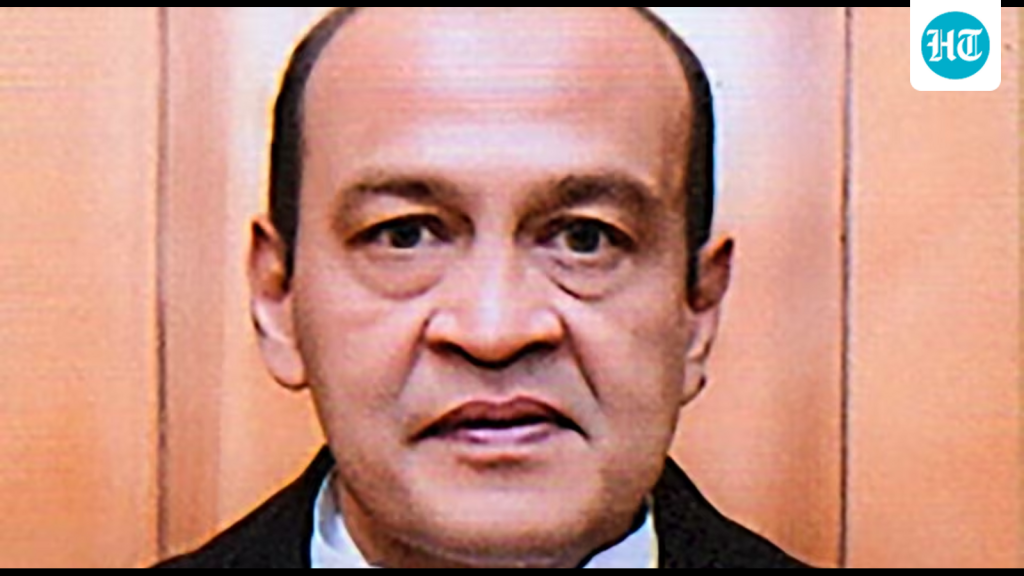
Delhi High Court declines request for FIR and CBI investigation into Justice Yashwant Varma matter
Bharatmorning.com – The Delhi high court has declined to hear a petition seeking registration of an FIR and a Central Bureau of Investigation inquiry into allegations involving unaccounted cash at the official residence of former Allahabad high court judge Justice Yashwant Varma. The court described the attempt to initiate such proceedings through the petition as a “wild witch hunt.”
Justice Amit Bansal, hearing the matter on Monday, allowed petitioner and advocate Ghanshyam Upadhyay to withdraw his plea. Upadhyay had sought directions for an FIR as well as the formation of a special investigation team to examine the alleged recovery of currency in Delhi in March 2025.
You have nothing better to do? I am dismissing it.
The bench indicated that Upadhyay had another legal remedy available and questioned his standing to pursue the petition before the high court. In legal proceedings, locus refers to whether a person has the right or sufficient connection to bring a case before a court. The court’s observation meant that it was not prepared to entertain the matter in the form presented.
Government and investigating agencies oppose petition
Premtosh Kumar Mishra, appearing as standing counsel for the government, the CBI and Delhi Police, opposed the petition. He argued that Upadhyay lacked locus and could pursue an alternative remedy instead.
Mishra also told the court that Upadhyay had previously approached the Supreme Court for substantially similar relief. That petition was dismissed, and no permission was granted to move the Delhi high court thereafter.
Upadhyay contended that neither a magistrate nor a special court would be sufficiently competent to deliver justice in the matter. The high court, however, did not accept the request to intervene by ordering an FIR or directing a special investigation.
Allegations emerged after fire at official residence
The controversy began after a fire at Justice Varma’s official residence while he was serving on the Delhi high court. Videos that purportedly showed bundles of currency notes burning later surfaced in connection with the incident.
Justice Varma and his wife were in Madhya Pradesh when the fire occurred. His daughter and elderly mother were present at the residence at the time. Justice Varma has consistently denied that he or anyone in his family placed money at the location.
The allegations prompted an internal judicial process. Then Chief Justice of India Sanjiv Khanna formed a three-member in-house inquiry committee to examine the circumstances surrounding the purported cash recovery. Such an in-house mechanism is separate from a police investigation and is used within the judiciary to assess allegations involving judges.
The committee submitted its findings in May 2025. It found Justice Varma’s explanation unsatisfactory. CJI Khanna subsequently asked him either to resign or face possible impeachment proceedings.
Constitutional removal process set in motion
After Justice Varma declined to step down at that stage, CJI Khanna forwarded the inquiry report and Justice Varma’s response to the President and the Prime Minister. The communication recommended that the constitutional process for his removal be initiated.
Justice Varma was transferred back to his parent court, the Allahabad high court, and judicial work was taken away from him while further action remained pending. The withdrawal of judicial assignments meant that he was not handling cases as the institutional and parliamentary processes developed.
In 2025, the Lok Sabha admitted a motion seeking removal proceedings and set up a committee of inquiry. A corresponding motion in the Rajya Sabha was not admitted because of procedural deficiencies. The differing outcomes in the two Houses underscored the formal requirements involved in initiating parliamentary action against a judge.
Justice Varma resigned in April while the parliamentary inquiry was continuing. His resignation came amid the ongoing examination of the allegations and the earlier in-house findings.
Inquiry committee’s later assessment
In August, the three-member parliamentary inquiry committee concluded that Justice Varma’s explanation concerning the unaccounted currency at his official residence was “evasive” and “misleading.”
The Delhi high court’s decision does not itself determine the factual merits of the allegations about the currency. Rather, it concerns whether the petitioner could seek an FIR, a CBI inquiry and a special investigation team through this particular case. The court’s refusal leaves the matter within the legal and institutional channels already identified during the hearing.
The episode has drawn attention to the distinct processes that may arise when allegations concern members of the higher judiciary. Internal judicial review, criminal-law remedies and parliamentary removal proceedings operate through different authorities and standards. The high court’s order reflects its view that a public-interest-style petition cannot bypass questions of standing, procedure and available statutory remedies.
For now, the petition seeking a court-directed criminal investigation has been withdrawn, while the broader record includes the in-house inquiry, the parliamentary committee process and Justice Varma’s resignation. The case remains notable for the constitutional and institutional questions it raised over accountability within the higher judiciary.
Related Reading
Frequently Asked Questions
What is HC refuses to entertain plea for FIR?
HC refuses to entertain plea for FIR is the main topic of this guide. The article explains the context, practical details, and next steps readers should understand.
Why does HC refuses to entertain plea for FIR matter?
HC refuses to entertain plea for FIR matters because readers are looking for a useful answer, not just a short summary. Good content should match search intent and help them decide what to do next.