
Enid Blyton’s Fairyland Meets a Screen-Obsessed Generation
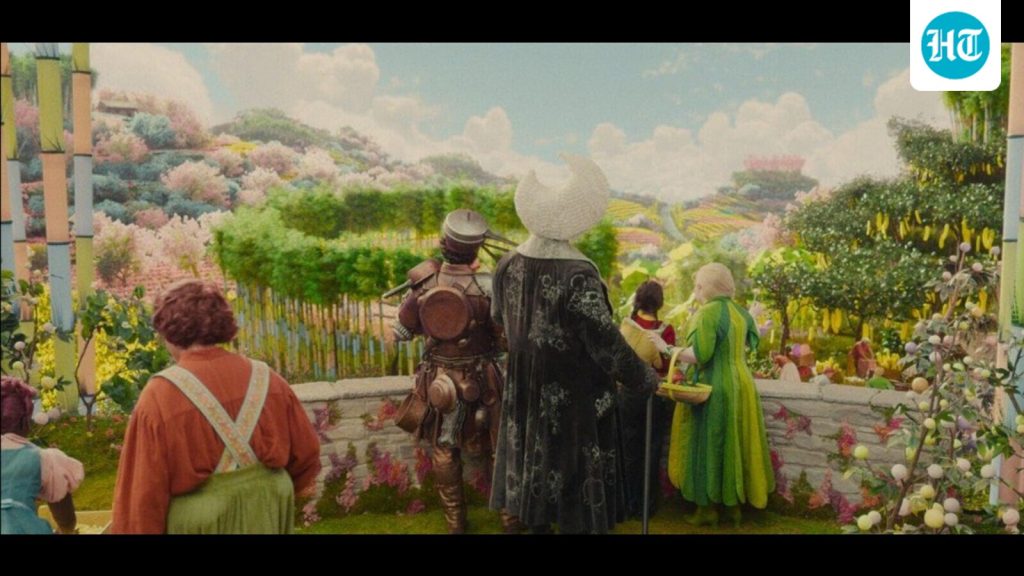
Bharatmorning.com – Ben Gregor’s The Magic Faraway Tree (2026) brings Enid Blyton’s enchanted world into collision with a contemporary childhood shaped by phones, algorithms and constant connectivity. The film’s central contrast is immediate: a teenage Instagram influencer, accustomed to online validation and digital convenience, finds herself stranded in a colourful fairyland where her phone is suddenly almost useless.
Without a 5G signal, electricity or a practical way to charge her device, the teenager faces an unfamiliar prospect: speaking to people in person and engaging with the world around her. Her response is comic but pointed. Faced with a fairy who takes pride in domestic skills and appearance, she asks whether feminism has reached this corner of the magical world.
“Has feminism not made it to these parts yet?”
The joke captures the film’s wider tension. Blyton created her best-known fantasy stories long before social media, artificial intelligence and data-driven consumer technology became everyday realities. Gregor’s adaptation uses that gap between eras to question what children may lose when their attention is continually absorbed by screens.
A classic series reshaped for cinema
Screenwriter Simon Farnaby adapts Blyton’s The Faraway Tree stories, a sequence that includes The Enchanted Wood (1939), The Magic Faraway Tree (1943), The Folk of the Faraway Tree (1946) and Up the Faraway Tree (1951). The books are built around episodes in which children climb the extraordinary tree, reach the clouds and discover a different land at its summit.
That structure gives the original stories a lively, episodic rhythm. For a feature film, Gregor and Farnaby turn those separate magical excursions into a broader story about imagination, self-worth and the pressure of life mediated through technology. The film argues that fairy tales retain value in 2026 because they offer children a space to encounter risk, mystery and possibilities beyond the logic of apps and algorithms.
Its critique of technology is deliberately conspicuous. The family’s move to the countryside begins with invasive consumer technology: a refrigerator, voiced by Judi Dench, contains a concealed camera that records private conversations for corporate data collection. Polly, played by Claire Foy, exposes the misuse of the technology and loses her job after becoming a whistleblower.
Her husband Tim, portrayed by Andrew Garfield, is a warm and endearingly awkward stay-at-home father raising Beth, Fran and Joe, children whose relationship with technology is already deeply ingrained. In this version of the story, Big Tech becomes the main real-world threat. That is a significant shift from Blyton’s setting, where the pressures forcing a family into the countryside were tied instead to economic survival and the domestic circumstances of the Second World War era.
Familiar faces in the enchanted wood
Gregor also restores many of the distinctive inhabitants that made Blyton’s fantasy landscape memorable. Moonface appears as the big-headed giant with little patience for humans. Silky is the golden-haired fairy whose warmth helps anchor the magical community. Dame Washalot returns as the erratic housekeeper known for throwing water, while Saucepan Man brings his poor hearing and accidental chaos. The Angry Pixie is also part of the journey.
These characters matter because the Faraway Tree stories never presented magic as decoration alone. Their strange habits, imperfections and odd rules make the lands above the tree feel both inviting and unpredictable. For children entering the fantasy world, wonder is inseparable from responsibility. Curiosity can lead to delight, but it can also bring danger, mistakes and consequences.
Why Wonder Is Not an Escape
Blyton’s work treats imagination as an essential part of childhood rather than a trivial diversion. The children do not merely visit new lands to be entertained; each journey asks them to accept unfamiliar rules and consider how they should behave when ordinary certainties disappear. The stories suggest that childhood includes a valuable ability to imagine that another kind of world might exist just beyond the visible one.
Gregor’s film develops that idea through the Land of Birthdays. Beth, Fran, Joe and Silky make wishes there, only to discover that the wishes do not bring the happiness they expected. Fran wants a different voice. Joe wants to become a video-game character. Silky wishes to be “small and fairest of fairies,” seemingly in the hope of winning Beth’s approval.
Their choices turn the sequence into a lesson about self-acceptance. As the characters try to undo what they have requested, they must navigate challenges that reveal why the traits they wished away were part of what made them distinctive in the first place.
In Blyton’s version, the Land of Birthdays is more directly centred on costumes and a magical birthday feast, with a modest warning about greed. The film preserves the basic setting but gives it a stronger cautionary dimension: wanting to become someone else can have unexpected costs.
That adjustment fits the adaptation’s larger concern with a culture that encourages constant comparison. In a world where identities can be filtered, edited and measured through online attention, the film places old-fashioned fairy-tale adventures beside recognisably modern anxieties. Climbing a tree, meeting strangers and making poor decisions may sound simple, but those experiences ask children to confront consequences in ways no screen can fully simulate.
The Magic Faraway Tree therefore uses Blyton’s enduring fantasy creation to make a contemporary case for play, presence and imagination. Its fairyland is not presented as a retreat from reality. Instead, it becomes a place where children can test who they are—and return better prepared to face the real world.
Related Reading
Frequently Asked Questions
What is Book to Screen?
Book to Screen is the main topic of this guide. The article explains the context, practical details, and next steps readers should understand.
Why does Book to Screen matter?
Book to Screen matters because readers are looking for a useful answer, not just a short summary. Good content should match search intent and help them decide what to do next.